

What if biological parentage and legal parentage don’t lead to the same answer? In California, that distinction can affect more than a child’s records. It may shape who can seek custody or visitation and how child support is addressed. If you’re uncertain about your rights or next steps, a paternity lawyer can help clarify the legal issues before you make consequential decisions.
Questions about genetic testing, court procedures, or whether a parentage decision could affect your relationship with your child are understandable. Establishing or challenging legal parentage is a formal process, and the details of your situation matter. Knowing what records exist, whether a court order is already in place, and which issues you need resolved can help you prepare.
This article explains what a paternity lawyer can do in California, how parentage connects to custody, visitation, and support, and what information may help you prepare for a conversation with an attorney. The Sands Law Group represents mothers and fathers in court paternity actions and related family-law matters in Los Angeles, Riverside, San Bernardino, and Kern counties. Understanding the issues can help you identify a focused next step.
Key Takeaways
- Biological connection and legal parentage are not always the same. Determine how parentage may have been established or challenged before taking action.
- A paternity lawyer can review your records, explain court options, and help you prepare for decisions connected to your parentage situation.
- Legal parentage is distinct from custody, visitation, and child support. Each issue may need separate attention.
- Contested facts, existing court orders, or high-conflict communication can make a parentage case more complex and call for careful preparation.
- Organize relevant court papers, communications, and parentage records before a consultation. The Sands Law Group represents mothers and fathers in paternity matters in Los Angeles, Riverside, San Bernardino, and Kern counties.
Role of a Paternity Lawyer in California Parentage Cases
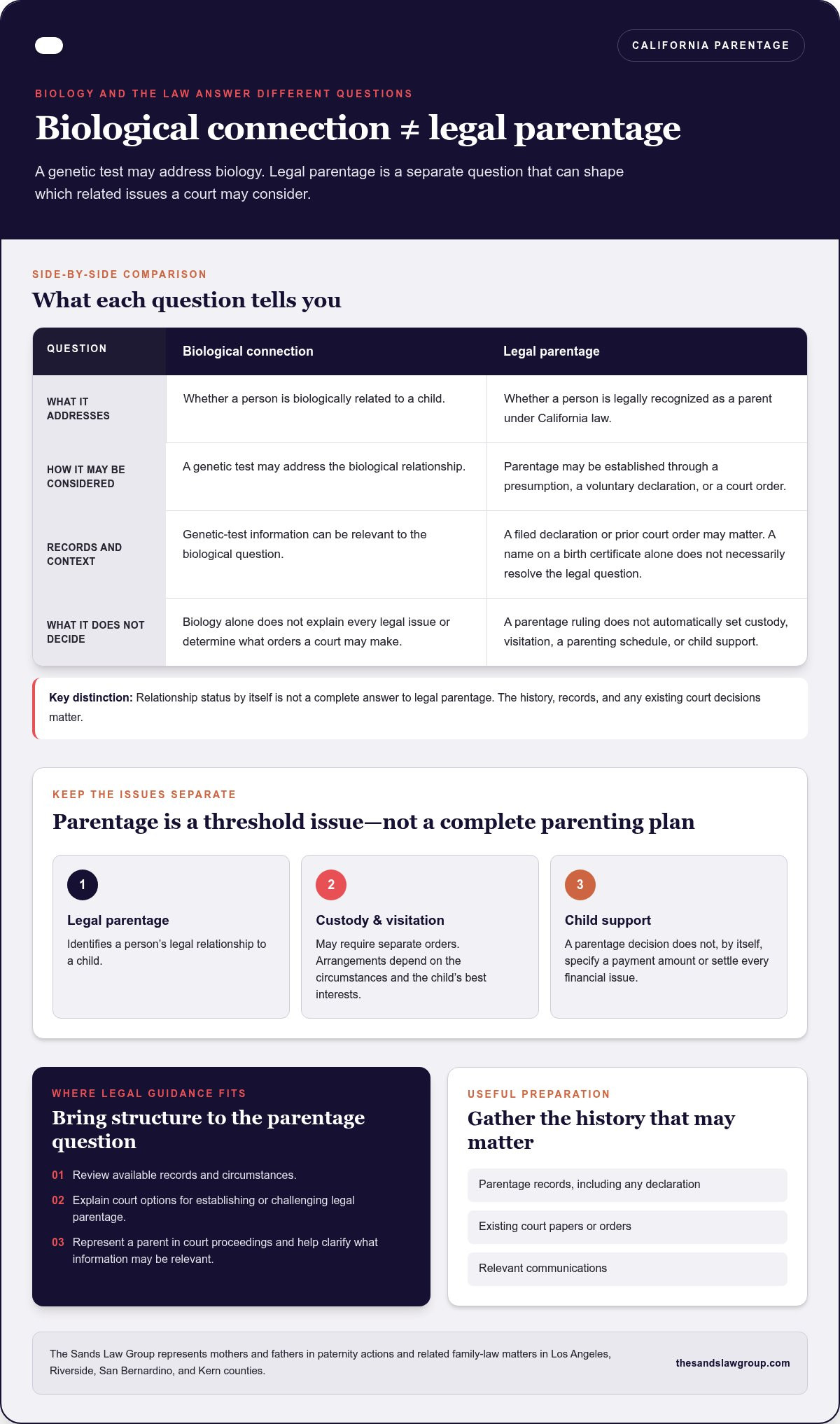
A biological connection and legal parentage are related, but they are not always the same question. California law uses “parentage” for the legal relationship between a child and a parent. Parentage can be established in different ways, including a presumption, a voluntary declaration, or a court order. A genetic test may address biology, but it does not, by itself, explain every legal issue or determine what orders a court may make. The general overview of paternity law describes how legal parentage can connect to matters such as custody and support.
A paternity lawyer represents a parent in legal proceedings to establish or challenge parentage and helps address the related rights and responsibilities that may follow. That work requires attention to both the parentage question and its practical consequences for the child and family. The legal path depends on the facts, records, and any existing court decisions, so there is no single answer for every family.
When is legal parentage uncertain or disputed?
Questions often arise when parents were unmarried, when one person disputes a claimed biological relationship, or when family records do not clearly show how legal parentage was established. For unmarried parents, a voluntary declaration of parentage or a court case may be relevant. A name on a birth certificate alone does not necessarily resolve the legal question, and relationship status by itself is not a complete answer.
Separate two questions: whether someone is biologically related to a child, and whether that person is legally recognized as a parent. California may recognize legal parentage through more than biology, including certain presumptions or a filed declaration. The history matters, especially if a declaration or prior court order exists or someone is seeking to challenge parentage.
What can a paternity lawyer help a parent address?
A lawyer can review available records and circumstances, explain court options, and represent a mother or father seeking to establish or challenge legal parentage through the courts. This can bring structure to a difficult dispute: what you are asking the court to decide, what information may be relevant, and how to respond to the other party’s position. Legal guidance can be particularly useful when facts are contested or earlier paperwork may affect the case.
Parentage is a threshold issue, not a complete parenting plan. After legal parentage is addressed, custody, visitation, and child support may still require separate consideration. A decision on one issue does not automatically settle every other issue. The child’s needs and the family’s circumstances remain important.
For example, one parent may need to understand whether parentage must be established before requesting custody or support orders. Another may need to respond to a challenge despite having acted as a parent. The Sands Law Group represents mothers and fathers in formal paternity actions and related custody, visitation, and child support matters. Legal analysis can help clarify the choices before you and prepare you for consequential next steps.
How can establishing or challenging paternity affect parental rights?
A parentage decision can shape which legal questions the court is positioned to address, but it does not automatically decide every issue between a parent and child. Establishing parentage may be a threshold step before a court considers certain rights and responsibilities. If parentage is challenged, the outcome may affect who can seek related orders. The consequences depend on the family’s circumstances, the information before the court, and any existing orders.
Keep the issues distinct. Legal parentage identifies a person’s legal relationship to a child. Custody, parenting time, and support involve additional questions. A parentage ruling alone does not create a complete parenting schedule or predict what a court will order. This distinction can be difficult when emotions are high, but it helps identify what must be resolved and what remains for separate consideration.
How does parentage relate to custody and visitation?
Parentage and parenting arrangements are connected, but they are not interchangeable. Once legal parentage is established, a parent may seek custody or visitation orders. The court’s decision about those arrangements depends on the circumstances and the child’s best interests. A ruling on parentage does not, by itself, set where a child will live, how parenting time will be divided, or how parents will handle decisions.
For example, a parentage case may resolve who is legally recognized as a parent while leaving disagreements about a parenting schedule for the court to address separately. If you are seeking a workable plan, understand both the parentage question and the arrangements you are requesting. The article’s separate California custody guide can provide a deeper discussion of custody law.
How can parentage connect to child support?
Legal parentage can be relevant to establishing parental support responsibilities. But a parentage decision does not, on its own, specify a payment amount or settle every financial issue. Support is a separate matter, and the facts and applicable legal standards must be considered before an order is made. This section does not address support calculations or how an order may be modified.
That distinction matters whether you are seeking to establish parentage or responding to a challenge. You may be concerned that resolving parentage will determine custody, visitation, and support all at once. Those issues can require distinct legal analysis, so one decision should not be assumed to dictate every other outcome.
A paternity lawyer can help you understand how a parentage case may relate to requests for custody, visitation, or support, and which questions may need separate attention. The Sands Law Group represents mothers and fathers in paternity actions and related family-law matters. If you’re weighing a consequential decision, you can discuss your parentage concerns with the firm and consider how the issues fit together in your circumstances.
When is hiring a paternity lawyer especially important?
Some parentage matters appear straightforward at first, but a form, family record, or informal agreement may not answer every legal question. If the other parent disagrees, or you’re unsure what a document means before signing it, learn about its legal consequences before taking a step that may be difficult to revisit. Getting advice does not mean a dispute must become more hostile. It can help you approach the situation with greater clarity.
Legal guidance may be especially valuable when several issues overlap. A parentage dispute can arise alongside disagreements about custody, visitation, or support. How those matters relate depends on the facts and any prior court decisions. A paternity lawyer can help you understand available options and prepare to address the issues in your case, without promising a particular outcome.
What circumstances can make a paternity dispute more complex?
Complexity may arise when parents dispute the biological relationship, records appear inconsistent, or a court has already issued an order concerning parentage or the child. A new filing or signed document may interact with that history. Review what the records establish before assuming the matter is open or resolved. Connected disagreements about custody, visitation, or support can raise further questions.
Timing and procedure also matter. Options and any applicable deadlines can depend on the document or order involved, when it was made, and the legal basis for seeking a change. Avoid relying on a general timeline found online when an existing order or declaration may affect your situation.
What does legal representation add beyond general information?
General information can explain common legal concepts, but it cannot assess how your records, communications, and history fit together. Counsel can review those details, identify issues that may be relevant, and help you understand what steps may be available under current California law. This can be useful before you sign a declaration, respond to court papers, or make an agreement with the other parent.
Representation can also bring focus to a case. A lawyer can help organize relevant information, explain what the court process may require, and develop an approach that reflects your goals and the facts rather than assumptions. The purpose is informed decision-making and clear advocacy, not a guarantee that the court will reach a particular result.
- Gather any parentage-related documents, court orders, and notices you have.
- Make a timeline of important events, including when you received or signed relevant papers.
- Write down the disputed issues and the practical outcome you hope to address.
These steps can make a conversation with counsel more productive, even if you don’t yet have every record. The Sands Law Group represents mothers and fathers in paternity actions, including efforts to establish or challenge legal parentage. Reviewing your circumstances can help you consider next steps before making a consequential decision.
How should you prepare for a California paternity lawyer consultation?
A focused conversation can turn a stressful situation into a clearer set of questions. You don’t need every document or a final decision about what you want the court to do before speaking with an attorney. A brief timeline, the records you have, and a few priorities can help explain what is happening and what you need to understand.
Which documents and details can help explain your situation?
Bring what’s available, even if the records seem incomplete. A paternity lawyer can help identify what matters and what may need follow-up. Missing paperwork does not prevent an initial discussion.
- Court records: Gather any existing orders, filed petitions or responses, hearing notices, and other official correspondence related to parentage or the child.
- Parentage records: Include relevant declarations, birth records, or other documents you believe may clarify how parentage was addressed.
- Communications: Save messages or letters about parentage, proposed agreements, or current disagreements. Note when and how important conversations occurred.
- Current arrangements: Write down where the child lives, how parenting time currently works, and whether there are unresolved custody, visitation, or support concerns.
- Event timeline: List key dates, such as when a document was signed or received, a court case began, or a disagreement arose. Mark dates you’re unsure about rather than guessing.
Organize the information in a manageable way, such as in a folder or short written summary. You don’t need to decide which details are legally important before the meeting. A clear account of what happened, including points where your recollection is uncertain, gives the attorney a practical starting point.
What questions should you be ready to discuss?
Before the consultation, identify the concern that feels most urgent and what you hope to understand. You may want to know whether parentage is legally established, how an existing order affects your options, or how a parentage matter relates to another family-law proceeding. A short list can keep the conversation focused.
- What are the possible next steps based on the records and facts I have?
- Could an existing declaration, court order, or related case affect the parentage issue?
- Are there timing concerns or procedural steps I should understand now?
- How might related custody, visitation, or child support questions need to be addressed?
- What additional information would help assess my circumstances?
These prompts are a starting point, not a substitute for advice tailored to your situation. California procedures and options can depend on the documents involved, the case history, and the relief being considered. You can discuss your circumstances with our team and bring the questions and records you have, even if your preparation is not complete.
How can The Sands Law Group help with paternity matters in Southern California?
Uncertainty about legal parentage can affect decisions that reach beyond a court filing. The Sands Law Group represents mothers and fathers in formal paternity actions, including cases to establish or challenge legal parentage through the courts. The firm helps clients understand their legal options, address disputed issues, and approach consequential family-law decisions with a clearer view of what may need to be resolved.
What can clients expect from paternity representation?
A paternity lawyer can guide clients through court proceedings concerning parentage and help them understand how the case may relate to parental rights and responsibilities. The Sands Law Group represents both parents seeking to establish parentage and those seeking to challenge it. The facts, documents, and history of each case shape the legal issues, so representation focuses on the circumstances rather than a promised result.
Parentage cases may also involve questions about custody, visitation, or child support. The firm represents clients in these related matters, helping them consider how the issues fit together while recognizing that each may call for its own analysis and court orders. For instance, a parent may need to address parentage while also seeking clarity about parenting arrangements. The appropriate approach depends on the case, and no particular decision or timeline can be guaranteed.
During a formal case, legal guidance can help explain court requirements and keep attention on the questions that matter to the family. The Sands Law Group represents mothers and fathers seeking to establish or challenge legal parentage, while also addressing related family-law concerns. This support can help you evaluate options and prepare for decisions without assuming every family follows the same path.
Where does The Sands Law Group serve California families?
The firm serves families in Los Angeles, Riverside, San Bernardino, and Kern counties. The county connected to a case may affect where it proceeds and which local court procedures apply, so the location and case history are important. The firm’s work in these counties includes formal paternity actions and related custody, visitation, and child support representation.
If you’re uncertain about whether to establish or challenge parentage, or how that issue relates to other family-law concerns, bring your questions to a scheduled conversation. You don’t need every answer before seeking guidance. Schedule a conversation with The Sands Law Group to discuss your circumstances and consider a focused next step.
Take Your Next Step With Greater Clarity
You don’t need to resolve every question before seeking legal guidance. Identify what feels most urgent, gather the information you have, and discuss what remains uncertain. A paternity lawyer can help you understand how your circumstances may shape your legal options, so you can make decisions with care rather than relying on assumptions or pressure.
The Sands Law Group can help you consider a path forward that reflects your situation and priorities. A conversation is an opportunity to raise difficult questions, explain what you hope to protect, and learn which issues may need attention. Schedule a consultation with The Sands Law Group to discuss your circumstances.
One considered step can bring greater focus to a challenging moment. With clear information and thoughtful guidance, you can move forward with more confidence.
Frequently Asked Questions
Does a biological father automatically have legal parental rights in California?
No, a biological relationship alone doesn’t always establish legal parentage or automatically resolve what rights a person can exercise. Legal status can depend on the parents’ circumstances and records, including whether a presumption, filed declaration, or court order applies. For example, a father’s name on a birth certificate may not settle the legal question by itself. A paternity lawyer can review the relevant documents and explain what they mean for your situation.
Can a paternity case involve a DNA test in California?
Yes, genetic testing may be relevant if parentage is disputed, but a test result isn’t necessarily the entire legal process. The court’s procedures and the role of testing depend on the case. If testing is being discussed, clarify whether it is part of a court process or another step, and how the result may relate to the legal question before the court. Keep copies of testing-related notices or records.
Is a voluntary declaration of parentage the same as a court order?
No. A voluntary declaration is a separate way to establish legal parentage. When signed by both parents and filed with the state, it can establish parentage without a court order. It is not merely an informal acknowledgment, so read it carefully before signing. If you’re considering challenging a declaration, the available options and deadlines can depend on the circumstances. Get case-specific advice before acting, especially if a court case is already underway.
Can an unmarried father seek custody or visitation in California?
Yes, an unmarried father may seek custody or visitation, but legal parentage status and existing records can affect what steps are needed first. Before asking the court to set a parenting schedule, a father may need to determine whether parentage has already been legally established. Parentage does not dictate the schedule by itself. Review any declarations or prior orders so the request addresses the right issues.
How long does a paternity case take in California?
There isn’t one reliable timeline for every case. A dispute requiring evidence or additional court proceedings may take a different course from an uncontested matter. Scheduling also depends on the court handling the case, including local calendars in Los Angeles, Riverside, San Bernardino, or Kern County. Ask which procedural steps apply and what events could affect timing. A general estimate cannot account for every case or guarantee when it will end.
Can child support be addressed in a paternity case?
Yes, child support may be addressed in connection with a parentage proceeding, depending on the issues raised and the circumstances. Establishing parentage does not itself tell you what support order a court may make. The court may need to consider support separately from questions about parenting time. A family-law attorney can help clarify which requests are before the court and what financial information may be relevant, without assuming a particular amount or outcome.

Article by
Thomas D. Sands, Esq.
Thomas D. Sands is the founder and CEO of The Sands Law Group, APLC. A California attorney with more than two decades of experience, he represents clients in divorce and family law matters as well as civil litigation and real property disputes. His approach emphasizes attentive, practical, and cost-conscious representation.
Sands is a 2023 Litigator of the Year honoree of the American Institute of Trial Lawyers and a 2023 Lawyer of the Year honoree of the American Institute of Legal Professionals. His firm has also received recognition among the 2025 Best Law Firms in America, a 2026 Benchmark Best of award, and a 2026 Law Firm of the Year honor.
Article reviewed by
Thomas D. Sands, Esq.
Thomas D. Sands is the founder and CEO of The Sands Law Group, APLC. A California attorney with more than two decades of experience, he represents clients in divorce and family law matters as well as civil litigation and real property disputes. His approach emphasizes attentive, practical, and cost-conscious representation.
Sands is a 2023 Litigator of the Year honoree of the American Institute of Trial Lawyers and a 2023 Lawyer of the Year honoree of the American Institute of Legal Professionals. His firm has also received recognition among the 2025 Best Law Firms in America, a 2026 Benchmark Best of award, and a 2026 Law Firm of the Year honor.
TOLL-FREE: 855-SANDS4U