
What happens to the house in a divorce in California depends on how it is classified and what the spouses agree to. Community property is generally divided equally by value, but that doesn’t mean the home must be sold: one spouse may keep it by buying out the other’s share, or the spouses may sell it and divide the proceeds. They can also agree to retain joint ownership and sell later.
It’s understandable to want a clear answer when the family home represents both financial security and stability. Selling later can be a practical option, but the agreement needs clear terms for ownership, mortgage payments, upkeep, and when the property will be sold.
This article explains when a spouse may keep the home, how a buyout or sale may work, and what to consider when agreeing to sell later. It also covers mortgage responsibility and how contributions during marriage can affect property division, helping you understand the issues to discuss in a California divorce.
Key Takeaways
- Whether the home is community or separate property depends on how it was acquired and funded, not simply whose name appears on the title.
- Keeping the home may involve buying out the other spouse’s share, refinancing, or offsetting the equity with other assets.
- If the home is sold, the mortgage and sale costs affect the proceeds available to divide.
- A written agreement to sell later should address mortgage payments, upkeep, decision-making, and what happens if circumstances change.
- Marital funds used for mortgage payments or improvements can affect each spouse’s interest, even when one spouse owned the home before marriage.
Can You Keep the Family Home After a Divorce in California?
Understanding what happens to the house in a divorce in California starts with how the home is classified and what interests each spouse has. A spouse may keep the home through an agreement or property division, but the name on the title alone does not decide the issue.
Community and Separate Property Classification
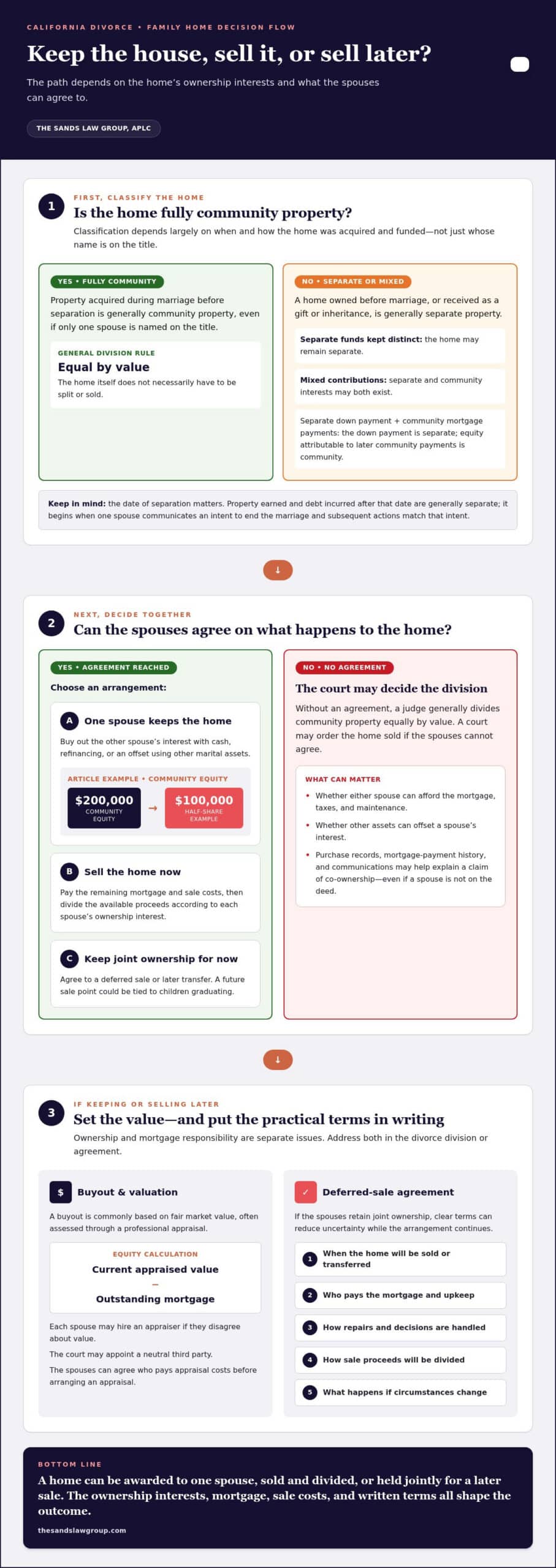
California classifies property as community, separate, or partly both, based largely on when and how it was acquired. That classification affects which interests are subject to division. A home owned before marriage is generally separate property, as are gifts and inheritances received by either spouse. Property acquired during marriage before the date of separation is generally community property, even if the title names only one spouse.
Title alone does not settle ownership: the California Supreme Court addressed that principle in Marriage of Valli, reported at 58 Cal.4th 1396. The date of separation matters too; it begins when one spouse communicates an intent to end the marriage and subsequent actions match that intent. Property earned and debt incurred after that date are generally separate. If separate and community funds were mixed, the home may have both types of interests.
Equal Division of Community Property
California generally divides community property equally by value, not by splitting every asset in half. One spouse may receive the family home while the other receives an offsetting share of other property. Spouses can agree to a different division; without an agreement, a judge generally divides community property equally. Keeping the home does not necessarily mean dividing the house itself.
To determine what happens to the house in a divorce in California, spouses must consider how it was purchased and funded. A home bought during marriage exclusively with marital funds is generally community property. A home purchased with separate funds may remain separate if those funds were kept distinct. If separate funds paid the down payment and community funds later reduced the mortgage, the down payment is separate, while equity attributable to those later payments is community.
Debt follows a related classification. A mortgage taken out during marriage to buy a home is generally community debt, and a debt may be community even if it is in one spouse’s name. A spouse may keep the house through an agreement or property award, but ownership and mortgage responsibility are separate issues. The divorce division should address both so the home and its debt are considered together.
Divorce transfers and later sales can raise different tax questions. Capital-gains treatment may depend on the circumstances of a later sale, while a change in ownership may affect property-tax reassessment. The timing and nature of the transfer matter when evaluating these consequences.
Selling the home and dividing proceeds
Spouses can sell the family home, pay the remaining mortgage and sale costs, and divide the available proceeds according to their ownership interests. A sale may make sense when neither spouse wants to keep the home or they cannot agree on who should.
Dividing Sale Proceeds
Sale proceeds are what remains after the mortgage and sale costs are paid, and their division depends on each spouse’s share. For a home that is fully community property, each spouse is generally entitled to 50% of its equity. A home with separate-property contributions may require a different calculation, so the ownership history matters before proceeds are distributed.
One spouse may instead keep the home by buying out the other’s interest. That often involves refinancing the mortgage, paying cash, or offsetting the other spouse’s share with marital assets. For example, if community equity is $200,000, a $100,000 payment or asset offset could represent half. The parties can negotiate a buyout or sale; a court may order the home sold if they cannot agree.
Title is not the only evidence of ownership. A spouse whose name is not on the deed may show that both parties understood or agreed that they co-owned the home. Purchase records, mortgage-payment history, and communications about ownership can help explain that claim. The court may also consider whether either spouse can afford the mortgage, taxes, and maintenance, and whether other assets can offset an interest.
Delaying a Sale for Children’s Stability
A deferred sale allows spouses to keep the home jointly for an agreed period before selling or transferring it. This can preserve a child’s housing stability when a court finds a compelling need for the child to remain in the home. A court may also allow a delayed sale when the spouses agree or the child’s best interests support postponement.
An agreement can set a future sale point, such as when children graduate, while allowing one spouse and the children to remain in the home. The parties should specify who pays the mortgage and upkeep, how repairs are handled, and how sale proceeds will be divided. Clear terms reduce uncertainty while joint ownership continues.
Valuing the Home and Appraisal Costs
A buyout is commonly based on the home’s fair market value, often assessed through a professional appraisal. Equity is generally calculated by subtracting the outstanding mortgage from the home’s current appraised value. The appraisal provides a shared starting point for negotiations and for calculating the amount one spouse may need to offset.
Each spouse may hire an appraiser if they disagree about value, and the court may appoint a neutral third party. The parties can agree on who pays appraisal costs before arranging an appraisal. If they do not agree, the court’s appointment may provide an impartial valuation for the property division.
If disagreement over ownership, value, or a buyout is delaying resolution, discussing the property division options can help clarify the issues and available paths.
Can a Judge Force the Sale of the House?
Yes. If spouses cannot agree about the family home, a California judge can order its sale as part of the divorce property division. The court may also award the home to one spouse or order a deferred sale. Children’s housing needs can matter, but custody and property division are legally separate issues.
A judge considers the home alongside the couple’s other assets and debts. Retirement benefits earned during marriage have a community-property share, which is divided using a Qualified Domestic Relations Order. Vehicles, furnishings, and other personal property acquired during marriage may also form part of the community estate. The outcome for the home can depend on how the entire property division balances, not just on the house.
For example, a spouse who wants the home may receive it while the other receives other assets to offset their interest. A court can also order a sale when neither spouse can keep the house or the parties remain at an impasse. The court considers whether a spouse can afford the mortgage, taxes, and maintenance. A sale can divide the home’s value when an award or buyout does not resolve the dispute.
Separate-property contributions can affect the final accounting. California Family Code §2640 allows reimbursement for traceable separate-property contributions, including a down payment on a home. The spouse seeking reimbursement needs records that connect the separate funds to the purchase or contribution. The court may consider bank statements, closing documents, and payment records when distinguishing a reimbursable contribution from community funds.
Commingling can make tracing contributions more difficult. If a spouse combines separate funds with marital income in an account used for mortgage payments, records showing the source and use of the funds become important. Property may have both community and separate interests. A clear transaction history can help identify each spouse’s contributions and how they affect the division.
California spouses also owe each other fiduciary duties intended to prevent either from gaining an improper advantage in property transactions. Concealing a sale, transferring assets without proper disclosure, or misrepresenting ownership can raise issues during division. The court can examine the transaction and the parties’ records. Complete financial documents support a transparent accounting of the home, retirement benefits, vehicles, debts, and personal property.
Children’s stability may support a deferred sale when a court finds a compelling need for a minor child to remain in the home. That consideration does not automatically give the parent with custody a larger share of the home’s value. The court weighs the child’s housing circumstances separately from each spouse’s property interests, then addresses both in the divorce orders.
Mortgage payments and improvements made with marital funds
A home owned before marriage may remain separate property, but later use of marital funds can affect the other spouse’s financial interest. Mortgage payments, improvements, and refinancing during marriage can affect how the home’s value is treated. The outcome depends on the home’s history and the source of each payment.
For example, one spouse may buy a house before marriage, then use earnings during marriage to pay down its mortgage. Those payments can support the other spouse’s claim to part of the home’s equity, even though the original property was separate. Improvements funded with marital income may also create a financial claim. The interest relates to contributions and value, not automatic ownership of the entire house.
The source of funds matters. A payment from a separate-property account is treated differently from one made with marital income. If the spouses used both, the home may have separate and community interests. Bank statements, mortgage histories, purchase documents, and improvement receipts can help show which funds paid each cost. Clear records can distinguish a spouse’s original investment from later marital contributions.
Refinancing during marriage can further complicate the accounting. The new loan may change the debt secured by the home, while marital funds used for payments or improvements may affect each spouse’s financial claim. Relevant details include why the couple refinanced, how they used the proceeds, and which funds paid the loan. Those records help explain the transaction’s effect on property interests.
Property division and mortgage responsibility are related, but they are not identical. A divorce order may assign payments between spouses, yet that allocation does not itself remove a borrower from a joint mortgage. If both spouses signed the loan, the lender’s agreement remains separate from the divorce division. Transferring the deed alone does not release either spouse from responsibility for the mortgage.
If one spouse keeps the home, refinancing or paying off the loan generally needs to address the joint mortgage. Refinancing can place the debt in the retaining spouse’s name; paying off the mortgage also resolves the joint loan. Until the loan is refinanced or paid, both borrowers may remain responsible to the lender, even if their divorce agreement says one spouse will pay.
This distinction matters before a final property arrangement is in place. If one spouse stops paying a joint mortgage, the other may still face the loan obligation while the home remains subject to the parties’ property division. A written agreement can allocate interim payments, repairs, and other housing expenses, but it does not replace the lender’s loan terms. Payment records help document who paid and when.
Agreeing to sell the house later
Agreeing to sell the family home later can preserve children’s stability while spouses postpone dividing its equity. It can also leave both parties financially connected after the divorce, so the agreement needs to explain who may remain, who pays expenses, and how the eventual sale will proceed. A clear plan turns “sell later” into workable terms rather than an open-ended promise.
California courts generally honor a freely and voluntarily made agreement between spouses about dividing the marital home, provided it is not affected by fraud, duress, or coercion. Include the arrangement in the written divorce settlement and specify the event that triggers the sale, such as a child graduating or one spouse moving out. If children’s housing needs determine the timing, address their expected schedule and how a change in circumstances affects the plan.
Joint ownership also means practical decisions remain shared. The agreement should identify who can live in the home, whether the other spouse may use it, and how the parties will handle repairs or improvements. For example, it can require advance written approval for major work and explain whether the cost affects either spouse’s share. These details can reduce disputes while both remain owners.
- Mortgage and carrying costs: State who must pay the mortgage, property taxes, insurance, utilities, and routine maintenance.
- Missed payments: Explain how a spouse will notify the other and address unpaid amounts before they accumulate.
- Sale decisions: Set out how the parties will choose a listing price, accept an offer, and cooperate with showings.
- Net proceeds: Describe how the mortgage and sale costs will be paid, then how remaining proceeds will be divided.
Mortgage responsibility needs particular attention. A divorce agreement can assign payments between spouses, but a spouse who signed the loan generally remains responsible to the lender until the mortgage is refinanced or paid off. If one spouse cannot pay, the other may face financial consequences despite the agreement. The arrangement should address missed payments and what happens if refinancing becomes necessary before the planned sale.
Consider ability to pay when determining whether deferred ownership is sustainable. Compare each spouse’s income and other obligations against the ongoing housing expenses, rather than relying on an expectation that circumstances will remain unchanged. A family law attorney can help structure the property terms alongside other assets and obligations in the divorce settlement. If you need guidance on setting workable sale terms, discuss your home-sale agreement.
The Sands Law Group, APLC: Divorce Legal Representation
The Sands Law Group, APLC provides Divorce Legal Representation, including assistance with property division questions involving a family home. If you and your spouse disagree about whether the house is community or separate property, how to value an ownership interest, or how to structure a later sale, legal representation can help address these issues in the divorce proceeding.
Decisions about the home may also intersect with mortgage obligations, spousal support, and children’s living arrangements. The Sands Law Group, APLC also provides Property Division Representation, Spousal Support Representation, and Child Custody and Visitation Representation for related family law matters. To discuss your situation, contact The Sands Law Group, APLC or visit thesandslawgroup.com.
Move Forward With a Clear Plan
Understanding what happens to the house in a divorce in California is a starting point; the next step is considering how an arrangement fits your financial future and family needs. Before committing to a plan, consider how the home decision relates to housing stability, ongoing expenses, and terms you can realistically maintain. A thoughtful discussion can help identify unresolved questions and prepare for a more informed conversation about your options.
The Sands Law Group, APLC provides Divorce Legal Representation for people addressing difficult family decisions. Its Child Custody and Visitation Representation and Spousal Support Representation can also address related concerns that may shape your next steps. For guidance specific to your circumstances, contact The Sands Law Group, APLC to discuss your situation. You can approach the next decision with greater clarity and a plan centered on what matters most to you.
Frequently Asked Questions
Does Title Determine Who Gets the House In A Divorce?
No. Title is relevant evidence, but it does not by itself determine whether a California home is community or separate property. For example, one spouse may appear on the deed even though marital funds helped acquire or pay for the home. The court considers how and when the property was acquired, the source of funds, and any valid ownership agreements before deciding how it fits into the divorce division.
What Happens to the Mortgage If One Spouse Keeps the House?
The spouse keeping the house may need to refinance the mortgage or pay it off to remove the other spouse from the joint loan. A divorce agreement that assigns payments to one spouse does not itself change the lender’s loan contract. If both spouses signed the original mortgage, both may remain responsible to the lender until the loan is refinanced or paid, even after the title changes.
What is community property?
Community property generally includes property and debt acquired by either spouse during marriage and before the date of separation. It can include earnings, a home purchased with marital funds, and a mortgage taken out during marriage. The key question is often the source and timing of the acquisition, not whose name appears on an account. A spouse’s separate inheritance generally remains separate if kept distinct.
Can I be forced out of my house before the divorce is final?
Filing for divorce alone does not require either spouse to leave the family home. A spouse generally cannot be forced out before the divorce is final unless a domestic violence restraining order or a specific judge’s order applies. A spouse may request a temporary order addressing who can remain while the case proceeds. If safety concerns or a court order are involved, follow the order’s terms and seek legal guidance.
What If the Home Was Owned Before the Marriage?
A home owned by one spouse before marriage is generally that spouse’s separate property. However, that does not always end the analysis. If marital income later pays down the mortgage or funds improvements, the other spouse may have a financial claim connected to those contributions. Purchase records, loan statements, and invoices can help distinguish original ownership from amounts contributed during marriage.
What is separate property?
Separate property generally includes assets owned before marriage, property acquired after the date of separation, and gifts or inheritances received by either spouse. For example, an inheritance deposited into an account kept apart from marital funds may retain its separate character. If funds are combined with community money or used toward a shared asset, tracing their source and use becomes important to determining the property’s classification.
Does It Matter Whose Name Is on the Deed?
The deed matters, but it does not necessarily resolve the divorce property question. A spouse whose name is absent may still claim an interest if marital funds contributed to the purchase or mortgage, or if both spouses understood that the home was jointly owned. In a Los Angeles, Riverside, San Bernardino, or Kern divorce, the acquisition history and payment records can help explain the ownership interests.
How is a house classified as community or separate property in a California divorce?
Classification depends on when the house was acquired, how it was funded, and whether separate and community funds were mixed. A home bought during marriage with marital earnings is generally community property; a premarital home is generally separate property. If both types of funds contributed, the home may have both community and separate interests. This page provides general information only, not legal advice. Contacting The Sands Law Group, APLC does not create an attorney-client relationship until a formal agreement is signed.

Article by
Thomas D. Sands, Esq.
Thomas D. Sands is the founder and CEO of The Sands Law Group, APLC. A California attorney with more than two decades of experience, he represents clients in divorce and family law matters as well as civil litigation and real property disputes. His approach emphasizes attentive, practical, and cost-conscious representation.
Sands is a 2023 Litigator of the Year honoree of the American Institute of Trial Lawyers and a 2023 Lawyer of the Year honoree of the American Institute of Legal Professionals. His firm has also received recognition among the 2025 Best Law Firms in America, a 2026 Benchmark Best of award, and a 2026 Law Firm of the Year honor.
Article reviewed by
Thomas D. Sands, Esq.
Thomas D. Sands is the founder and CEO of The Sands Law Group, APLC. A California attorney with more than two decades of experience, he represents clients in divorce and family law matters as well as civil litigation and real property disputes. His approach emphasizes attentive, practical, and cost-conscious representation.
Sands is a 2023 Litigator of the Year honoree of the American Institute of Trial Lawyers and a 2023 Lawyer of the Year honoree of the American Institute of Legal Professionals. His firm has also received recognition among the 2025 Best Law Firms in America, a 2026 Benchmark Best of award, and a 2026 Law Firm of the Year honor.
TOLL-FREE: 855-SANDS4U