
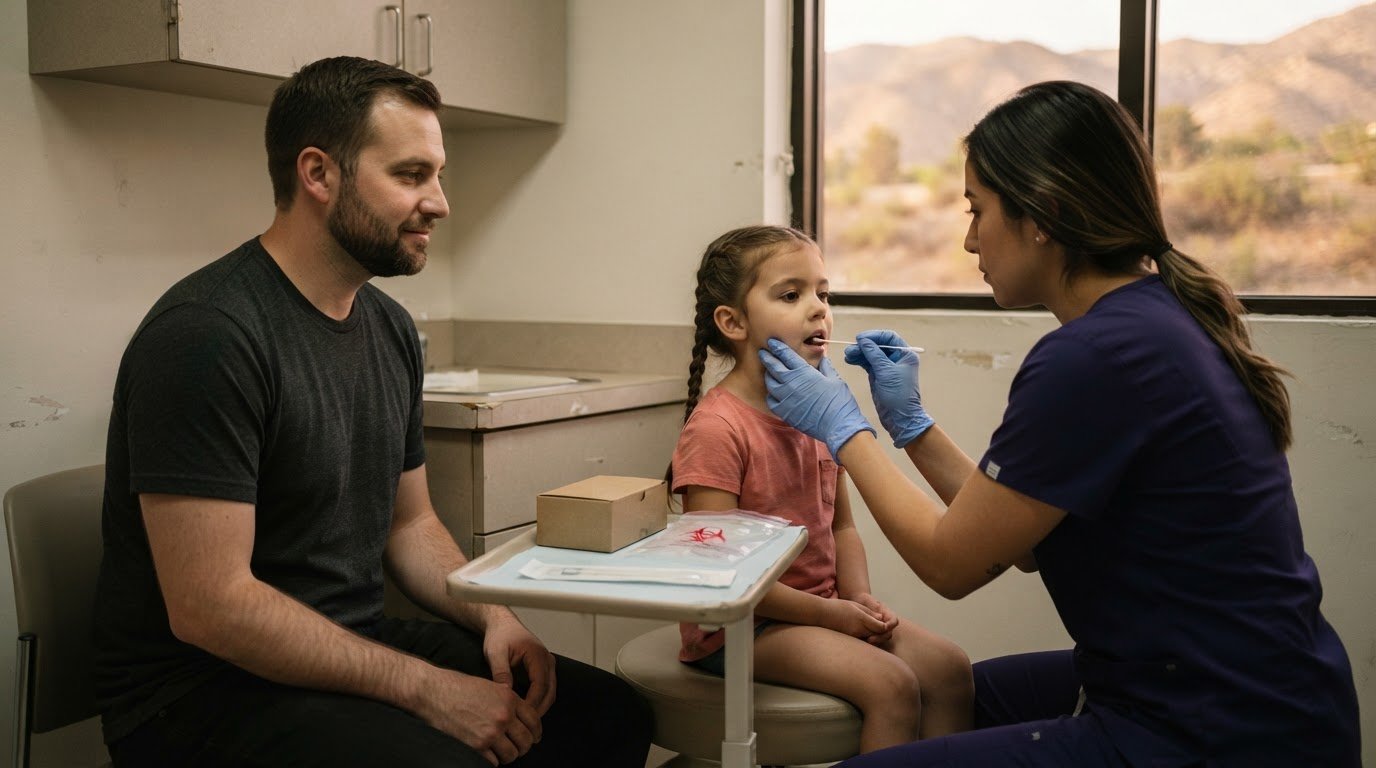
A DNA test can clarify biological parentage, but it may not resolve legal paternity on its own. A paternity fraud attorney in San Bernardino can help assess whether genetic testing and a court action may address a disputed parentage finding. California courts may order genetic testing when parentage is uncertain, and according to the California Legislature, they accept DNA results indicating at least a 99% likelihood of biological paternity as proof.
If you’re facing a possible paternity mistake, the uncertainty can affect more than family relationships. It may also raise questions about legal rights and responsibilities. This guide explains how DNA evidence, California paternity law, and San Bernardino County family court proceedings may shape your options. The right legal steps depend on how paternity was established.
You’ll learn when a signed parentage declaration may be challenged, why timing matters, and what a court may consider when reviewing a request to change legal parentage. This overview can help you understand the process and prepare for an informed discussion about your circumstances.
Key Takeaways
- Legal paternity can arise through different pathways, so the way it was established affects which challenge may be available.
- According to the California Department of Child Support Services, either parent may cancel a signed Voluntary Declaration of Parentage during the first 60 days after signing by submitting a cancellation form to the state’s child support agency.
- A challenge may involve more than biological evidence; existing parentage orders and the timing of a request can also shape the court process.
- San Bernardino County paternity actions provide a court process for addressing disputed legal parentage and related family matters.
- Legal representation can help organize a paternity action around the evidence, the existing legal status, and the outcome you’re seeking.
DNA testing to challenge paternity
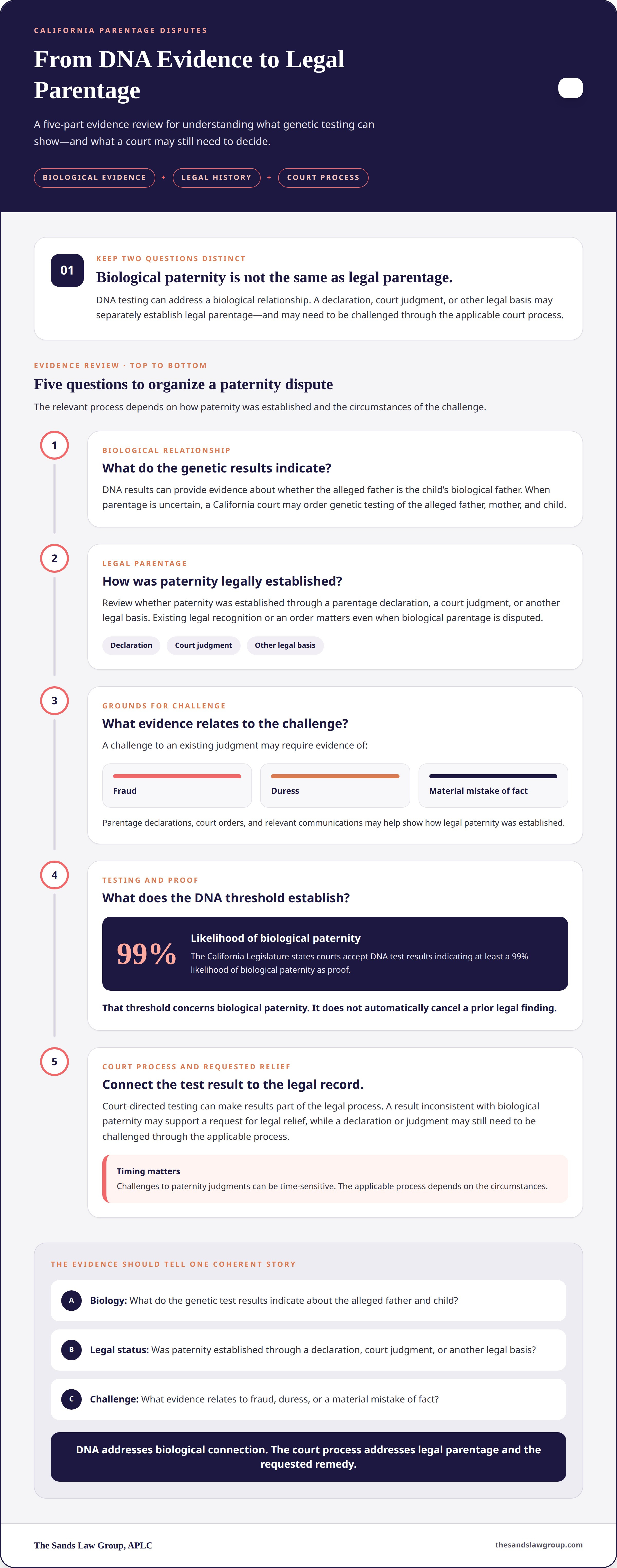
DNA testing can address whether a man is a child’s biological father, but biological evidence and legal parentage are separate questions. In California, genetic testing may clarify a disputed biological relationship, while the court process must also address any existing legal recognition or order. This distinction matters when a father has already been named on a parentage declaration or judgment.
What evidence is needed to prove paternity fraud in California? DNA results can provide evidence about biological parentage. Parentage declarations, court orders, and relevant communications may help show how legal paternity was established. Challenging an existing judgment may also require evidence of fraud, duress, or a material mistake of fact.
When parentage is uncertain, a California court may order genetic testing of the alleged father, mother, and child. Court-directed testing can make the results part of the legal process, rather than leaving the dispute to informal claims or privately obtained results. The test addresses biological connection; the court must separately consider the existing legal status and the requested remedy.
The California Legislature states that courts accept DNA test results showing at least a 99% likelihood of biological paternity as proof. That threshold concerns proof of biological paternity, not whether a prior legal finding is automatically canceled. For example, a result inconsistent with biological paternity may support a request for legal relief, while a declaration or judgment may still need to be challenged through the applicable court process.
In a paternity dispute, the evidence should tell a coherent story across three questions:
- Biological relationship: What do the genetic test results indicate about the alleged father and child?
- Legal parentage: Was paternity established through a declaration, a court judgment, or another legal basis?
- Grounds for challenge: Is there evidence relevant to fraud, duress, or a material mistake of fact?
These distinctions can prevent a damaging misunderstanding. DNA testing may answer whether someone is the biological father, but it does not explain how paternity became legally established. A careful review connects the test result with the parentage record and requested court action. Timing matters too, because challenges to paternity judgments can be time-sensitive, and the applicable process depends on the circumstances.
When considering a test, the legal strategy should account for who needs testing, whether a court order is appropriate, and which documents govern parentage. A focused paternity action can present biological evidence alongside the legal history, allowing the court to address both the disputed relationship and its consequences.
Divorce and family law
In California, legal parentage can affect child support, custody, and visitation, so a paternity dispute may intersect with a divorce or another family law matter. These issues are connected but distinct: biological parentage is one question, while family court orders address legal rights and responsibilities. Keeping them separate helps clarify what the court must decide.
A legally recognized father may be required to pay child support and cover half of a child’s uninsured health costs and child-care expenses. California calculates child support under a statewide guideline using each parent’s income and share of parenting time. A change in legal parentage may affect whose circumstances and financial information are relevant to a support order, but disagreement between parents does not by itself resolve an existing order.
Once paternity is established, a recognized father may ask the court for custody and visitation orders. California law distinguishes legal custody, which concerns decisions about a child, from physical custody, which concerns where the child lives. Either type may be shared or held by one parent, and the court does not automatically divide parenting time equally. California law does not favor either parent based on gender.
Parents who disagree about custody attend mediation through Family Court Services. Mediation gives them a structured opportunity to discuss parenting arrangements before the court decides disputed issues. An agreement can define practical terms; if disagreement remains, the court may need to resolve the contested matters. Paternity status and the children’s needs remain important context.
Domestic violence findings also affect custody decisions. In California, a finding of domestic violence creates a presumption against custody, though evidence of rehabilitation and the children’s best interests may rebut it. The record and specific circumstances therefore matter. A parent should understand how this issue may interact with parentage and current custody orders.
For married fathers, custody and support issues are handled within the divorce case, which has a mandatory waiting period before the divorce becomes final. That waiting period does not mean every parenting issue must remain unresolved; family matters are addressed through the divorce process. A disputed parentage issue may need separate attention so related orders reflect the applicable legal status.
When a relationship ends alongside uncertainty about parentage, family law representation can help organize the connected questions: legal status, support, parenting time, and any existing orders. For guidance on how divorce and custody issues relate to your circumstances, discuss your family law situation.
How paternity fraud may arise
A paternity dispute can begin when a man is identified as a child’s biological father, whether through deliberate misrepresentation or mistaken belief. The label “fraud” describes a serious concern, but it does not establish what happened. A court considers the circumstances and evidence, including how the man came to be treated as the legal father. Whether the issue involves deliberate misrepresentation or an honest mistake may matter to the case.
Legal recognition may develop through a relationship with the child’s mother or child, even before anyone questions biological parentage. For example, a man may take on a father’s role and later learn information that raises doubts. A relationship-based understanding is not the same as DNA evidence, and neither fact alone resolves legal status. The dispute may become urgent when child support, custody, or a parentage record is involved.
In California, a husband may be treated as the legal father when married to the mother at the child’s birth, without a formal parentage process. An unmarried parent may instead sign a Voluntary Declaration of Parentage. Because the declaration can establish legal parentage, a mistaken belief about biology may have lasting consequences after signing. The key question is not only what the adults believed, but also which legal step established paternity.
Consider an unmarried couple who signs a declaration at the hospital, then separates after the man receives information that raises questions about biological paternity. The declaration and later information are different parts of the record: one shows how legal parentage was established, while the other may prompt a challenge. A court action must address the legal status; a private disagreement does not automatically change parentage.
A dispute can also surface after a child support request, a custody disagreement, or a change in the parents’ relationship. These events may bring long-standing assumptions into focus, but they do not prove intentional deception. For instance, a father who learns of a possible biological discrepancy during a support matter must distinguish the new concern from the existing legal order. The timing and source of the information can help determine what needs examination.
To understand how the situation arose, the legal review typically connects three points:
- Recognition: How was the man named or treated as the father, such as through marriage or a declaration?
- New information: What specific event or evidence prompted the dispute about biological parentage?
- Legal consequences: Are child support, child custody, or other parentage orders already in place?
These details help distinguish a factual disagreement from a legal challenge. Evidence that a man may not be the biological father does not, by itself, prove fraud or erase legal parentage. The court needs a clear account of how recognition occurred, what information changed the parties’ understanding, and what relief is sought. This framework keeps the child’s interests and the legal record central as the dispute proceeds.
Paternity actions in San Bernardino County
Choose a family law attorney who can explain parentage procedure, assess available evidence, and connect the requested court action to your goals. Challenging paternity may affect existing parentage, support, and custody arrangements. The child’s relationships and stability also require careful consideration.
Finding a County Family Law Attorney
San Bernardino County paternity and custody cases are heard through the court’s Family Law Division on North Arrowhead Avenue. Rancho Cucamonga residents can file paternity actions at San Bernardino County Superior Court. The Sands Law Group, APLC represents clients in paternity actions and related family law matters. An attorney can explain how your case fits the local court process and what legal question the filing needs to address.
During an initial evaluation, look for a clear discussion of the existing legal record, the biological dispute, and the relief you seek. A case involving a signed parentage declaration, for example, may require a different analysis from one involving an existing court judgment. A lawyer should explain those distinctions plainly, rather than treating a DNA result as the only issue.
Ask how the attorney would organize the evidence and identify related orders. Relevant records may include a parentage declaration, prior court orders, and genetic test results. The attorney should connect each document to a specific issue, such as legal parentage or a requested change to an order. This helps you understand the proposed approach before the case advances.
Clear communication matters throughout a family law case. You should understand what the court action seeks, what information the attorney needs, and how custody or support questions may intersect with parentage. A focused evaluation can also identify whether the dispute concerns biological facts, the way parentage was established, or both.
Risks to Custody and the Child
A paternity challenge can affect more than the adults’ legal positions. If the court changes legal parentage, existing support obligations or parental rights may need attention. The child may also experience uncertainty about family relationships, especially when the presumed father has played an ongoing parenting role.
A biological test does not automatically decide custody. California recognizes legal and physical custody, and a parentage dispute may intersect with separate custody proceedings. Parents may still disagree about decision-making or parenting time after parentage evidence is presented. The court must address the relevant legal questions and the child’s best interests.
Before filing, an attorney can help assess current orders, the child’s relationship with the presumed father, and the specific outcome being requested. This review can clarify whether a parentage challenge also requires attention to custody, visitation, or child support. It can help keep court filings focused on evidence and legal issues rather than personal accusations.
Parents should consider how they communicate about the dispute while proceedings are pending. A child should not be placed in the middle of adult conflict or asked to resolve questions about biological parentage. Careful legal guidance can help keep the challenge focused on the court’s task and reduce avoidable confusion as the case moves forward.
Paternity law
California paternity law distinguishes biological from legal parentage, and how recognition occurred can shape a challenge. A declaration, court judgment, or marital presumption may have different consequences.
California Paternity Fraud Definition
Paternity fraud describes identifying a man as a child’s biological father, whether knowingly or through mistaken belief. The term alone does not prove deception or undo legal parentage. A court may consider how the man became recognized as the father, what evidence later raised doubt, and whether a judgment resulted from fraud, duress, or a material mistake of fact.
California courts accept DNA results indicating at least a 99% likelihood of biological paternity as proof, according to the California Legislature. A result showing the presumed father isn’t the biological father may support a challenge, but the existing legal record still matters. The court action must address parentage, not merely establish a biological discrepancy.
Deadlines for Disputing Paternity
For a signed Voluntary Declaration of Parentage, either parent may cancel it during the first 60 days after signing by submitting a cancellation form to the state’s child support agency, according to the California Department of Child Support Services. That window applies to cancellation of the declaration; it isn’t a universal deadline for every paternity challenge.
Challenges to paternity judgments are time-sensitive, and the applicable process depends on the circumstances. If the 60-day cancellation period has passed, or a court judgment already exists, a lawyer can assess the recognition documents, evidence, and available court action. A person seeking to dispute paternity should address the issue promptly rather than assume the same deadline governs every case.
A signed and submitted declaration has the same authority as a court-issued judgment. The date and method of recognition are important: a parent reviewing a declaration should distinguish its cancellation process from a request to set aside a judgment.
Support After Paternity Is Disestablished
Disestablishing paternity can address legal responsibilities and parental rights, including child support. A person should not assume that a DNA result alone stops an existing support order or repays past payments. The court action must address legal status and related orders; payment history and the terms of existing orders matter to that review.
Men found not to be biological fathers may still face support obligations if they do not contest paternity within the applicable time frame. Seeking a parentage ruling and asking the court to address support are distinct concerns. A lawyer can review whether an order remains active and what relief the case requests.
If a declaration, judgment, or support order affects your situation, schedule a discussion about your paternity case to consider the relevant records and next legal steps.
The Sands Law Group, APLC: Paternity Actions
The Sands Law Group, APLC handles paternity actions for people seeking to address disputed legal parentage, challenge an existing determination, or clarify related parental rights and responsibilities. If DNA results raise questions or a declaration or court order affects your situation, legal counsel can help assess the record and identify the appropriate court action. Where parentage concerns overlap with divorce, custody, visitation, or support issues, the related family law matters may also need coordinated attention. The next step is a focused discussion of how paternity was established, what evidence is available, and what outcome you’re seeking. To discuss your circumstances, contact The Sands Law Group, APLC.
Take the Next Step Toward Clarity
A disputed parentage matter can affect how you plan for your family’s future. Start by identifying the decision you need addressed and the records that bear on it. Consider the outcome you seek, which existing orders may be involved, and how the dispute affects your relationship with the child. Bringing these concerns into a focused legal discussion can help set a thoughtful direction.
A paternity fraud attorney in San Bernardino can assess how a parentage challenge relates to other family law matters. The Sands Law Group, APLC handles paternity actions, divorce representation, child custody and visitation, and spousal support matters. Where these issues overlap, coordinated legal guidance can keep them connected without losing sight of the specific question before the court.
You don’t have to resolve every uncertainty before asking for guidance. Start with a clear account of your circumstances and the questions most important to you. Contact The Sands Law Group, APLC to discuss your situation and consider a considered path forward for your family.
Frequently Asked Questions
How Can a San Bernardino Paternity Attorney Help?
A paternity fraud attorney in San Bernardino can assess the parentage record, organize relevant evidence, and represent a parent in a court action to establish or challenge legal parentage. The Sands Law Group, APLC handles paternity actions and related family law matters. If a support or custody order rests on disputed parentage, an attorney can help identify which issues the court filing needs to address. The firm serves families in San Bernardino, Los Angeles, Riverside, and Kern.
What Is Paternity And Why Does It Legally Matter In California?
Legal paternity identifies a child’s legally recognized parent, which can shape who may seek custody or visitation and who may have child support responsibilities. For example, an unmarried father generally needs legal parentage established before requesting custody or visitation orders. Parentage may also affect matters beyond a current dispute, including a child’s potential inheritance or eligibility for certain benefits through a parent. The legal record, not biology alone, determines recognized status.
How can someone challenge paternity in San Bernardino County?
A person can pursue a court action addressing parentage in San Bernardino County, presenting relevant records and biological evidence for the court’s consideration. San Bernardino County paternity cases are handled through the Superior Court’s Family Law Division. The appropriate filing depends on how paternity was established, such as through a declaration or judgment. The Sands Law Group, APLC handles paternity actions and can review those documents and frame the requested relief, including whether the case also involves support or parenting orders.
Can DNA testing overturn a voluntary declaration of parentage or court judgment?
DNA evidence can support a challenge, but a test result alone doesn’t automatically cancel a declaration or set aside a judgment. According to the California Legislature, courts accept results indicating at least a 99% likelihood of biological paternity as proof. Either parent may cancel a signed Voluntary Declaration of Parentage during the first 60 days by submitting a cancellation form to the state’s child support agency, according to the California Department of Child Support Services. Challenges to judgments require court action.

Article by
Thomas D. Sands, Esq.
Thomas D. Sands is the founder and CEO of The Sands Law Group, APLC. A California attorney with more than two decades of experience, he represents clients in divorce and family law matters as well as civil litigation and real property disputes. His approach emphasizes attentive, practical, and cost-conscious representation.
Sands is a 2023 Litigator of the Year honoree of the American Institute of Trial Lawyers and a 2023 Lawyer of the Year honoree of the American Institute of Legal Professionals. His firm has also received recognition among the 2025 Best Law Firms in America, a 2026 Benchmark Best of award, and a 2026 Law Firm of the Year honor.
Article reviewed by
Thomas D. Sands, Esq.
Thomas D. Sands is the founder and CEO of The Sands Law Group, APLC. A California attorney with more than two decades of experience, he represents clients in divorce and family law matters as well as civil litigation and real property disputes. His approach emphasizes attentive, practical, and cost-conscious representation.
Sands is a 2023 Litigator of the Year honoree of the American Institute of Trial Lawyers and a 2023 Lawyer of the Year honoree of the American Institute of Legal Professionals. His firm has also received recognition among the 2025 Best Law Firms in America, a 2026 Benchmark Best of award, and a 2026 Law Firm of the Year honor.
TOLL-FREE: 855-SANDS4U