

What if the child support figure you expected doesn’t reflect your actual income, parenting schedule, or your child’s needs? When the numbers or conversations with the other parent feel uncertain, a child support lawyer can explain how California’s guidelines apply to your family and help you understand possible next steps.
It’s understandable to want a clear answer, especially when support decisions affect your child’s day-to-day stability. California’s guideline calculation, updated effective September 1, 2024, considers factors including each parent’s net disposable income, parenting time, and tax details. The formula provides a consistent starting point, but the accuracy of the information used in the calculation matters.
This article explains what a child support lawyer can do, which factors can shape a California support order, and when legal representation or self-representation may make sense. You’ll also learn how support questions can connect with custody, visitation, divorce, or paternity matters, and what records can help you prepare. These considerations apply to families navigating cases in Los Angeles, Riverside, San Bernardino, and Kern, as well as elsewhere in California.
Key Takeaways
- A statewide guideline provides a framework, but disputed or incomplete information can affect how it applies to your circumstances.
- A child support lawyer can assess case-specific facts and explain possible next steps when agreement is difficult.
- Organize existing court papers, support orders, income records, and relevant expense documents before seeking legal guidance.
- Consider whether your situation is straightforward enough to manage yourself or whether related custody, visitation, divorce, or paternity issues call for legal representation.
How California Child Support Decisions Are Made
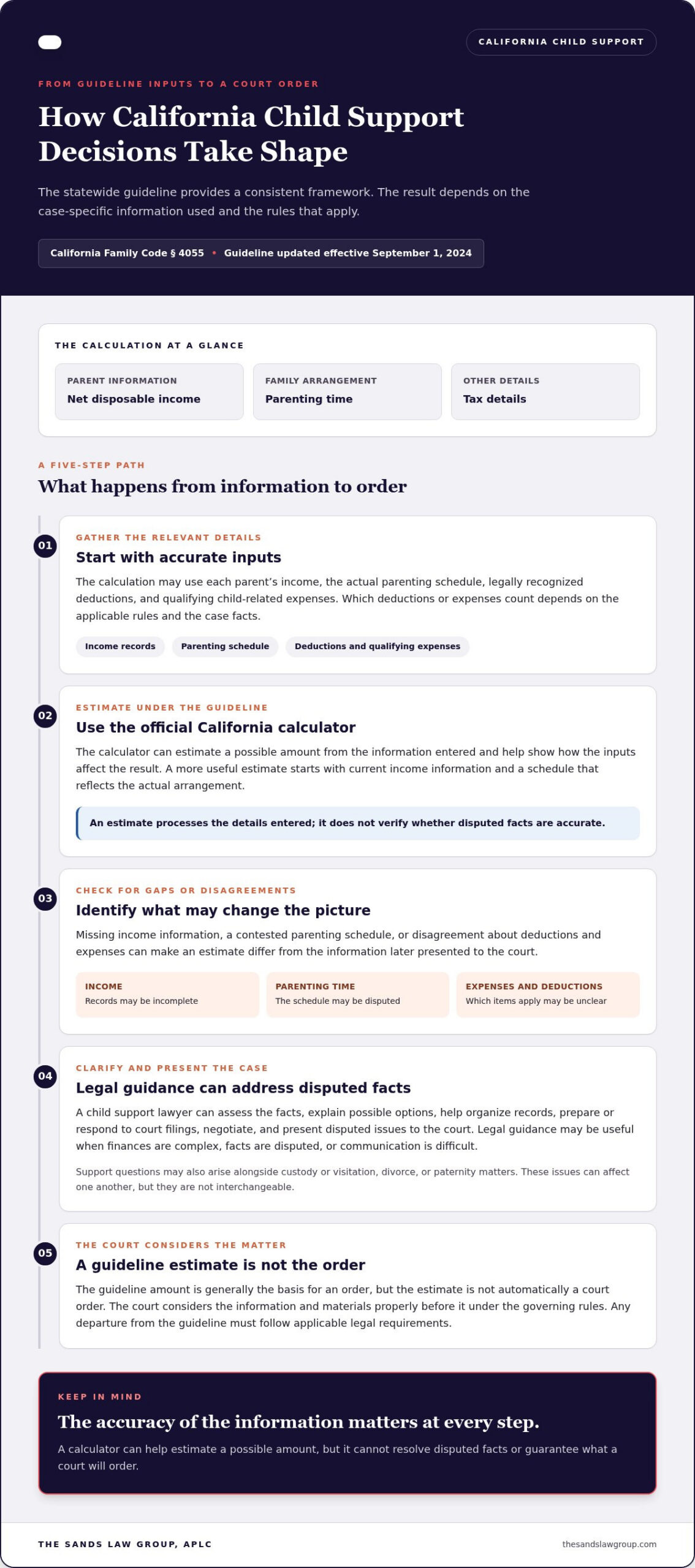
California uses a statewide guideline to calculate child support, providing a consistent framework while accounting for each family’s circumstances. The guideline formula is set out in California Family Code section 4055. Under the formula introduced effective September 1, 2024, the calculation considers factors including each parent’s net disposable income, parenting time, and tax details.
A guideline amount is a starting point, not automatically a court order. The result depends on the information entered and the rules that apply to the case, so an estimate can differ from the order ultimately made by the court. A child support lawyer can help identify which facts need clarification and how to present them.
Which information may affect a California support calculation?
Relevant information may include each parent’s income, the parenting schedule, legally recognized deductions, and qualifying child-related expenses. The details matter: a parenting schedule that differs from what either parent first assumed, or incomplete income records, may change the information used in an estimate. Which deductions or expenses count depends on the applicable rules and the facts of the case.
California’s official child support calculator can provide an estimate based on information entered by the user. It can help you understand how the inputs affect a possible amount, but it does not resolve disputed facts or replace review of the current guideline rules. For a more useful estimate, gather current income information and use a parenting schedule that reflects the actual arrangement.
Why do guideline estimates and final orders sometimes differ?
An estimate is only as reliable as its inputs. If income information is missing, a parenting schedule is contested, or the parents disagree about which expenses or deductions apply, the estimate may not reflect the complete picture presented to the court. The court considers the information and materials properly before it under the governing rules.
California’s guideline amount is generally the basis for an order, and any departure from it must follow applicable legal requirements. A calculator cannot establish that a different amount is appropriate or guarantee that a court will approve one. A guideline estimate depends on case-specific information and current rules.
If you’re unsure whether your records accurately reflect your circumstances, a consultation can help you identify which information may matter and understand the options available in your case.
Are California Guidelines Enough Without a Child Support Lawyer?
A statewide formula can provide a useful estimate, but it cannot resolve every factual or procedural disagreement. Parents may still differ about income records, parenting-time details, or which information applies to their situation. A calculator processes the information entered; it doesn’t determine which disputed facts are accurate or how they should be presented in a legal proceeding.
Whether to seek representation is a practical decision, not a requirement for every parent. If both parents agree on the relevant facts and can complete the necessary steps, self-help resources may be sufficient. For a plain-language overview of California child support laws, readers can also consult WomensLaw.org. A local child support agency may assist with child support services, while a private attorney advises and represents an individual parent. Their roles differ: agency assistance is not the same as having a lawyer advocate for your specific position.
When might legal representation be especially useful?
Consider getting legal guidance if a key fact is difficult to establish or contested. Examples include disputed income, self-employment earnings, complex finances, disagreement about parenting-time records, or differing views about child-related expenses. An existing family-law case involving custody, visitation, divorce, or paternity may add related issues to consider.
These circumstances don’t guarantee that representation will change the support amount. They may, however, make it more important to understand which information matters, what documents can help clarify the facts, and what steps are available. Base your decision on the complexity of the case and your ability to address it, not on pressure or fear.
What can a lawyer address that a calculator cannot?
A child support lawyer can review records in context, identify possible gaps or inconsistencies, and explain how the facts may relate to the legal issues in your case. This can help you prepare for a discussion or decide whether a disagreement needs to be addressed through formal court procedures.
Depending on the matter, an attorney may also help with negotiations, preparing or responding to filings, and presenting unresolved issues to the court. A lawyer can explain your options and advocate for your position, but can’t control the court’s decision or ensure the other parent will agree. If you’re weighing your options, schedule a consultation to discuss your circumstances.
How to Prepare for a Child Support Legal Consultation
You don’t need to resolve every disagreement before a child support consultation. A clear record of what has happened, what has changed, and what remains uncertain can help a child support lawyer understand your concerns and discuss practical next steps with you.
Which records and details should parents organize?
Gather the documents you already have, then arrange them so the history is easy to follow. Useful materials may include:
- Current child support orders and other relevant court papers, including filed documents.
- Recent income records and information about changes in employment or earnings, with dates when possible.
- Records of relevant child-related expenses, such as receipts or statements that help explain the expense.
- A concise timeline of support payments, parenting schedules, and unresolved disagreements.
Note changes in parenting time or household circumstances and when they occurred. Keep original records intact, and don’t access another person’s private accounts or obtain information unlawfully. Share only information relevant to your legal question, and take care not to circulate unnecessary sensitive details about your child.
If your concern is changing an existing order or addressing unpaid support, the firm’s California child support modification and enforcement articles may provide useful related reading.
What questions can help make a consultation productive?
Write down your most important questions before the meeting. This helps keep the conversation focused, particularly if the situation is stressful or involves more than one family-law issue. You might ask:
- Which facts or documents may matter to my support issue?
- What procedures or next steps may apply to my circumstances?
- Are there additional records I should gather or organize?
- How should I expect communication and updates about the matter to work?
- What do the legal terms being used mean, and what options should I understand before deciding?
You don’t need to know every legal term or arrive with a perfect file. Be candid about what you know, identify what you’re unsure about, and ask for clarification before making decisions. A consultation can help you understand how your records relate to your concerns and what choices may be available, without promising a particular outcome.
Schedule a consultation to discuss your child support concerns and bring the records and questions that best explain your situation.
How a California Child Support Lawyer Can Help You Move Forward
Moving forward usually starts with defining the issue, reviewing the facts, and understanding which legal options may apply. A child support lawyer can help you make sense of the records and disagreements involved, explain relevant procedures, and advocate for your position. That guidance can bring greater clarity to a stressful situation, but no attorney can guarantee a particular order or outcome.
How does child support fit into a broader family-law case?
Support questions may arise alongside divorce, custody, visitation, or paternity proceedings. For example, a change in a parenting schedule may be relevant to a support matter, while a paternity case may involve questions that must be addressed before related family-law issues can proceed. Understanding how these matters connect can help you see the overall legal picture rather than treating each concern in isolation.
The Sands Law Group, APLC focuses exclusively on family law and represents clients in child support and child custody matters, as well as related family-law proceedings. Its attorneys can help parents understand how support concerns relate to their circumstances and consider available options.
What is a practical next step if you need guidance?
Before seeking advice, gather the records that best explain your situation, such as current court papers, income information, and relevant expense documentation. Write down key dates, unresolved concerns, and the questions you most want answered. You don’t need to have every document or legal term figured out; a concise account of what has changed and what you’re trying to resolve is a useful starting point.
The Sands Law Group serves clients in Los Angeles, Riverside, San Bernardino, and Kern. If you’re in one of these areas and would like to discuss your child support concerns with the family-law team, you can schedule a consultation with The Sands Law Group. The conversation can help you understand your circumstances and possible next steps, while leaving any decision about how to proceed in your hands.
Take the Next Step Toward a Clearer Support Plan
California’s child support guideline offers a framework, but the outcome depends on accurate, case-specific information. Understanding how income, parenting arrangements, and relevant expenses may affect your situation can help you ask better questions and prepare for what comes next. Organizing court papers, financial records, and a concise timeline can also make it easier to assess your options.
A child support lawyer can help you understand how the facts fit within the legal process, especially when information is disputed or support concerns overlap with custody, visitation, divorce, or paternity matters. The Sands Law Group focuses exclusively on family law and represents clients in child support and related custody matters in Los Angeles, Riverside, San Bernardino, and Kern. Legal guidance can clarify your options, though no attorney can guarantee a particular result.
If you’re ready to discuss your circumstances, schedule a consultation with The Sands Law Group. Discussing your situation with the family-law team can help you move forward with greater clarity and your child’s stability in view.
Frequently Asked Questions
Is a child support lawyer necessary in California?
No, not every parent needs a child support lawyer. If the matter is straightforward and both parents agree on the relevant information, they may be able to proceed without contested representation. Legal advice may be helpful if you disagree about income, parenting time, expenses, or required procedures. Consider the facts, the level of disagreement, and what is at stake for your child. A lawyer can explain options but can’t guarantee a particular result.
How is child support calculated in California?
California uses a statewide guideline framework that considers information such as each parent’s income and parenting time, along with other legally relevant factors. An online estimate can help you understand a possible amount, but it depends on the accuracy and completeness of the information entered. It isn’t a court order or individualized legal advice. Use current information and rules when reviewing an estimate, particularly if your circumstances or records are disputed.
Can a child support lawyer change the amount of support?
No. A child support lawyer can’t personally change an order or promise that a court will change it. An attorney can review the existing order and your circumstances, explain procedures that may apply, and help prepare or present a request when appropriate. The court decides based on governing law and the evidence. Don’t assume an informal agreement between parents changes an existing court order; get advice about what steps may be needed.
What happens if the other parent and I disagree about income or parenting time?
The disagreement may require reviewing relevant records and the parenting arrangement, rather than relying on assumptions or an incomplete estimate. An attorney can help identify which facts may matter, organize supporting documents, and explain possible ways to address the dispute, including negotiation or court procedures. Keep relevant records intact and note specific points of disagreement. Any decision depends on the evidence and applicable California law, so a different support result isn’t guaranteed.
Can parents use California child support services without hiring a lawyer?
Parents may be able to access services through a local child support agency without hiring a private attorney, but the agency’s role differs from private legal representation. The best route depends on the issue and the help you need. A private attorney can provide advice tailored to your circumstances and represent your interests in a legal matter. Agency services, procedures, and eligibility can vary, so consult official resources for current information.
How much does a child support lawyer cost?
Legal fees and billing arrangements vary by firm and by the work a particular matter requires, so a generic online figure may not reflect your situation. Before deciding how to proceed, ask for a clear explanation of the engagement terms, billing approach, and work involved. Document review, negotiations, disputed facts, and court proceedings can affect the scope of legal work. Make sure you understand the proposed arrangement before moving forward.
What should I bring to a child support lawyer consultation?
Bring any current support orders, court papers, recent income records, and information about parenting time and child-related expenses. A brief timeline of payments, schedule changes, or unresolved disagreements, along with a written list of questions, can help focus the discussion. Share only records you’re entitled to access and protect sensitive information about your child. The Sands Law Group serves clients in Los Angeles, Riverside, San Bernardino, and Kern.

Article reviewed by
Thomas D. Sands, Esq.
Thomas D. Sands is the founder and CEO of The Sands Law Group, APLC. A California attorney with more than two decades of experience, he represents clients in divorce and family law matters as well as civil litigation and real property disputes. His approach emphasizes attentive, practical, and cost-conscious representation.
Sands is a 2023 Litigator of the Year honoree of the American Institute of Trial Lawyers and a 2023 Lawyer of the Year honoree of the American Institute of Legal Professionals. His firm has also received recognition among the 2025 Best Law Firms in America, a 2026 Benchmark Best of award, and a 2026 Law Firm of the Year honor.
TOLL-FREE: 855-SANDS4U