
The most reassuring conversation about divorce isn’t the one with every answer; it’s the one that keeps children out of adult conflict. Learning how to tell kids about divorce starts with a clear, age-appropriate message: the divorce isn’t their fault, both parents love them, and adults will help them through the changes. Share what they need to know, not painful details about the relationship, blame, or financial matters.
It’s understandable to worry about saying too much, too little, or the wrong thing. Children may need time to process the news, and they may ask questions as plans become clearer. A calm, consistent explanation can help them understand what’s changing without making them feel responsible for the adults’ decisions.
This guide offers a practical script and explains how to adapt it to your child’s age and concerns. You’ll learn what to share and what to leave out, how to describe upcoming changes honestly, and how to preserve familiar routines where possible. The aim isn’t to make the conversation easy, but to help your child feel loved, informed, and supported.
Key Takeaways
- Keep the explanation age-appropriate, reassure your child that the divorce isn’t their fault, and leave room for questions.
- Discuss custody disagreements without blame, making clear that both parents love the child and adults are working through the decisions.
- Explain upcoming changes as clearly as you can, separating confirmed plans from details that are still being worked out.
- Protect familiar routines where possible, and use a simple schedule to help your child understand what comes next.
- Prepare a calm, consistent script so the conversation stays focused on reassurance rather than adult conflict.
1. How much information should I give my child about the divorce?
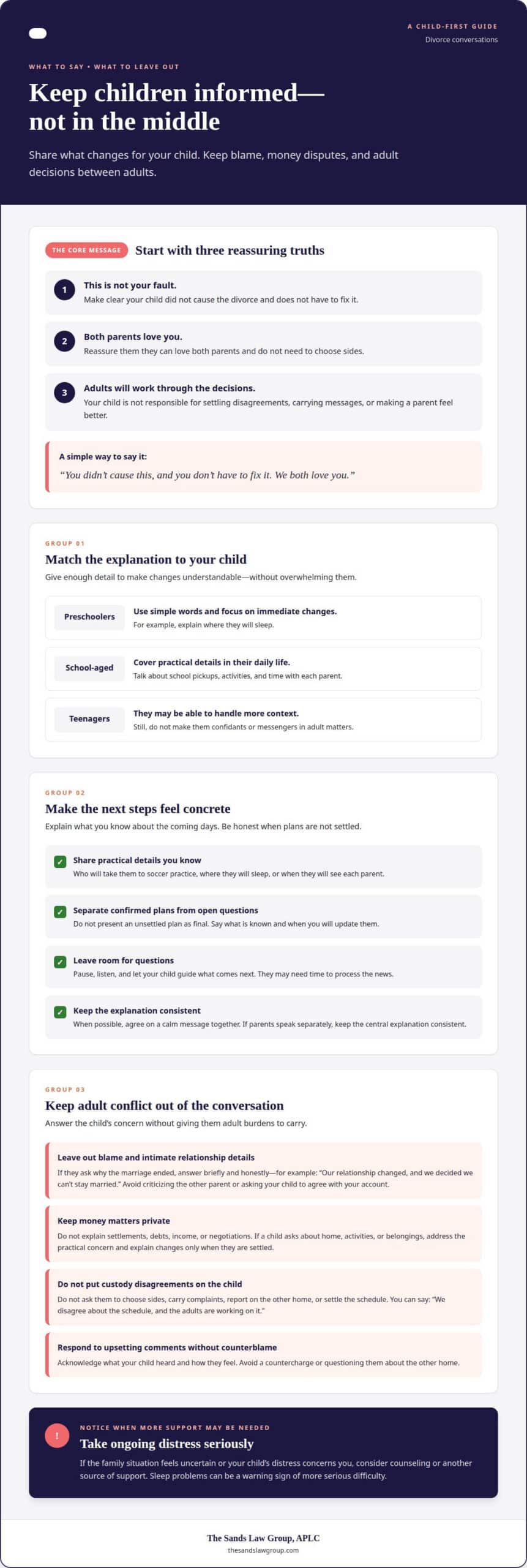
Give children the information they need to understand what is changing, without placing adult conflict on their shoulders. Start with three points: the divorce is not their fault, both parents love them, and adults will help them feel secure. For example, say, “You didn’t cause this, and you don’t have to fix it. We both love you.” Then pause, listen, and let your child guide the rest of the conversation.
For preschoolers, use simple words and focus on immediate changes, such as where they’ll sleep. School-aged children may need practical details about school pickups, activities, and time with each parent. Teenagers can usually handle more context, but they still shouldn’t become confidants or messengers. At every age, explain only what your child can understand now, then invite questions without overwhelming them.
When custody disagreements arise, describe the problem without asking children to choose sides. You might say, “We both love you. We disagree about the schedule, and the adults are working on it.” If other adults are helping resolve the disagreement, you can mention that without sharing legal or personal details. Make clear that your child’s role is not to settle the conflict, carry messages, or make either parent feel better.
Children may ask why the marriage ended. Answer honestly but briefly, without sharing intimate details or blaming the other parent. You might say, “Our relationship changed, and we decided we can’t stay married.” Avoid promising that every detail will make sense later, which may leave children waiting for an explanation. If one parent has already told them, don’t challenge that account in front of them. Acknowledge what they heard, correct any misunderstanding calmly, and keep the central message consistent.
Practical information can make the change easier to picture. Explain what you know about the next few days: who will take your child to soccer practice, where they’ll sleep, or when they’ll see each parent. If a detail is still undecided, say what is known and when you’ll update them. This gives children something concrete to rely on without presenting an unsettled plan as final.
When possible, both parents should tell the children together and calmly, using an agreed message. If that isn’t possible, the parent who is with them most can share the news. Parents can also speak separately while keeping their explanations consistent.
Consider counseling or another source of support if the family situation feels uncertain or your child’s distress concerns you. Sleep problems can be a warning sign of more serious difficulty, so take them seriously and seek appropriate support.
2. Avoiding financial details and parental blame
Money disputes and accusations belong in adult conversations, not a child’s explanation of divorce. A child who hears that one parent “took everything” or “won’t pay” may feel caught between parents, even when the statement reflects a real disagreement. Keep the conversation focused on what changes for the child, rather than why one parent believes the situation is unfair.
Children may ask whether the family can afford their home, activities, or familiar belongings. Answer the practical concern without explaining settlements, debts, income, or negotiations. For example, say, “We’re working out the household details. We’ll tell you if your room or activities need to change.” If a change is settled, explain it plainly. If it isn’t, don’t present a possible outcome as a final decision.
Blame can create anxiety because children often love both parents and may feel guilty for remaining close to either one. Avoid labels such as “selfish,” “irresponsible,” or “the reason we’re divorcing.” Don’t ask a child to agree with your account, carry a complaint, or report what the other parent says at home. That turns a child into a witness or messenger instead of allowing them to have their own feelings.
Before speaking with children, agree on a neutral explanation where possible. Each parent can identify what the children need to know, which details are private, and how to respond if they ask about money or conflict. A consistent answer might be, “We have adult matters to resolve, but you don’t need to take sides. We’ll explain anything that changes your daily life.” This acknowledges the situation without drawing children into a dispute.
If parents cannot agree on every word, keep the central message free of accusations. Don’t use the conversation to criticize the other parent or make a custody disagreement sound like a choice the child must make. If children ask, “Why can’t I stay here every night?” respond to the schedule itself: “We’re working out time with each parent. You can love us both, and this is for adults to decide.”
Children who have already heard negative comments may repeat them or ask you to confirm them. Resist the urge to respond with a countercharge. You can say, “I’m sorry you heard upsetting things. You don’t have to solve our disagreements, and you can talk to me about how you feel.” Then listen without questioning them about the other home.
When custody discussions are difficult to separate from parenting concerns, discuss child custody concerns with a legal professional. Keep children outside the negotiation while adults address the decisions affecting their time and care.
3. Explaining the timeline and upcoming changes
If you’re confident the separation is moving forward, tell your children earlier rather than waiting until every detail is settled. Time to adjust can help them prepare for changes in their home and daily life. Explain what is happening now, what is expected next, and what remains undecided. For example, you might say, “We’ve decided to live separately. We’re still planning where everyone will stay.” A clear sequence is more useful than a promise that everything will stay the same.
Build the explanation around events your child can recognize. You could describe the next steps as “we’ll talk again when the living arrangements are clear” or “we’ll explain the schedule before it changes.” Avoid giving a date or deadline unless you know it is reliable. If plans shift, tell the children what changed and what they can expect now. This helps them understand what will happen without making them responsible for adult decisions.
Separate settled plans from possibilities. “You’ll keep going to school at Lincoln Elementary” is different from “You might have a new bedroom.” If a move is still being discussed, don’t describe a possible room as certain. Children may picture changes vividly, so invite specific questions about what they want to know. A practical answer can be brief: “We haven’t chosen a home yet, but we’ll talk with you when we know more.”
A provisional schedule can make an uncertain transition easier to picture. Post a simple calendar in the kitchen with known school days, activities, and time with each parent. Mark tentative plans clearly, then update the calendar when decisions change. For example, if soccer practice remains on Tuesday, show who will take your child only once that arrangement is settled. A visible plan gives children a concrete reference between conversations.
Changes to where a parent lives can raise questions about bedrooms, belongings, pets, and familiar routines. Address the detail your child raises instead of describing every possible change at once. If they ask whether their favorite books will move, explain where they can keep them during the transition. If the answer depends on a housing decision, say so plainly and return to the question when plans are clearer.
Some children may show distress through behavior, sleep, or repeated questions as the relationship changes. A child might ask whether you will still be married after hearing that one parent is moving. Answer directly, using words they understand, and allow feelings without demanding a positive reaction. Their response may change as events happen, so revisit the timeline when a new step begins.
Keep each update connected to a real milestone, such as a move, a new schedule, or a change in school transportation. This gives children a reliable rhythm without a steady stream of uncertain possibilities. A brief check-in after each change also gives them room to name a new concern, rather than carrying confusion into the next transition.
4. Maintaining routines and stability
Divorce can change a child’s home life, but familiar routines can give each day a recognizable shape. Keep school attendance, bedtime, meals, and regular activities consistent as circumstances allow. For example, if your child usually attends soccer practice on Tuesday, keeping that commitment can offer continuity while other plans change. Stability doesn’t require identical households; predictable care and clear expectations matter more.
Start with the routines your child relies on most. Write down school start times, medication instructions, homework habits, favorite activities, and bedtime expectations. Share practical details between parents so a child isn’t repeatedly explaining what they need. A short written list can help each home maintain familiar patterns while allowing reasonable differences in household rules.
A custody calendar can make transitions easier to understand. Mark the days your child will be with each parent, along with school events and activities. Keep it somewhere the child can see, such as a shared family calendar or a paper calendar at home. If a plan changes, update it and explain the change directly. Children shouldn’t have to rely on overheard conversations to know where they’re going after school.
Give transition days a simple, repeatable structure. For example, pack a school bag the night before, keep essential supplies in an agreed place, and explain who will handle pickup. If a child moves between homes, familiar items such as a book or comfort object can help each space feel more personal. Don’t make the child responsible for carrying messages or managing the parents’ schedule.
Not every routine can remain unchanged. A move, new commute, or revised custody schedule may affect activities and family time. Explain the specific adjustment, such as, “Your piano lesson will be on Thursday now, and Dad will take you.” Then identify what remains steady, such as the same teacher or weekly lesson. Concrete details help children understand the change without needing to solve practical problems themselves.
Watch how your child responds as routines shift. A child may resist a transition, become quieter after school, or ask repeatedly about the next visit. Listen to the concern and clarify the plan instead of treating every reaction as defiance. If a schedule change brings up strong feelings, acknowledge them while keeping the information clear and calm.
Preserving routines isn’t the same as asking children to behave as if nothing happened. Keep space for honest conversations, and don’t pressure a child to appear cheerful during family activities. A predictable bedtime can coexist with sadness about a parent’s absence. Steady structure and room to express feelings support children’s adjustment without making them responsible for adult emotions.
Review the calendar and daily arrangements whenever a new living or parenting plan takes effect. A brief check-in can reveal whether transportation, schoolwork, or activity schedules are creating problems. Where possible, adjust practical details with the other parent while keeping the child’s role focused on being a child, not coordinating two households.
5. A script for explaining divorce to kids
A prepared script can help keep the first conversation calm when strong feelings make it difficult to find the right words. Before talking, agree on the central message, the practical details you can share, and how you’ll answer likely questions. If both parents can speak calmly together, they can present one consistent explanation. If not, speak separately and keep the message aligned.
Use this example as a starting point, then adapt it to your family’s circumstances:
“We need to tell you something important. We’ve decided to divorce, so we won’t be married anymore. This is an adult decision, and it isn’t your fault. We both love you, and we’ll keep caring for you. We’re working out what will change. For now, you’ll keep going to school, and we’ll tell you about changes to your schedule when we know them. You can tell us how you feel, and we’ll listen.”
Keep the words honest and specific. If the child asks where each parent will live, answer with the current plan rather than offering certainty you can’t provide. If housing or a schedule remains undecided, say, “We’re still working that out. We’ll explain it when we know.” This gives a truthful answer without drawing children into negotiations or adult conflict.
Anticipate questions instead of ending with, “Do you have any questions?” A child may wonder who will take them to school, whether they’ll see each parent, or whether they caused the divorce. Let them know they can ask about those concerns now or later. Then pause, listen, and respond to the feeling behind the question, not just its practical details.
If a child worries that a parent’s future partner will replace them, reassure them directly: “No one will replace your relationship with me.” If they ask whether they must choose where to live, explain that adults are responsible for working through parenting arrangements. Don’t ask children to decide which parent is right or carry messages about custody.
Children may react with silence, anger, tears, or relief, so don’t require a particular response during the conversation. You can say, “You don’t have to feel okay about this today.” Stay available, and return to the discussion when a new question or practical change arises. Children may need to hear key information more than once as they process divorce over time.
Before speaking, write down the few points you want both parents to communicate. Keep adult blame, financial disputes, and uncertain promises out of the script. If unresolved parenting decisions are making a consistent message difficult, discuss your divorce arrangements with a legal professional before those disputes reach the children.
The Sands Law Group, APLC: Divorce Legal Representation
The Sands Law Group, APLC provides divorce legal representation for parents addressing decisions that shape family life after separation. If discussions about parenting time, custody, property division, or spousal support become difficult, legal representation can help you understand the issues and work toward a clear path forward. This support is separate from the conversation with your children: adults can address legal questions while keeping children out of negotiations and conflict.
Consider legal guidance when parenting arrangements remain unresolved or decisions about property and support affect your family’s plans. Contact The Sands Law Group, APLC to discuss your situation.
Support the Next Conversation With Steady Guidance
A child’s understanding can change as family circumstances develop, so the conversation may need to continue beyond the first explanation. Choosing how to tell kids about divorce isn’t a single decision you must get perfect; it’s an ongoing effort to communicate honestly, respond to new questions, and protect your child from adult burdens. Take the next step one conversation at a time.
As decisions about parenting arrangements and family responsibilities take shape, legal guidance can help you understand the choices affecting your family. That clarity can make it easier to talk with your children about what is changing, without asking them to carry decisions that belong to adults.
If you’re ready to discuss your family’s legal needs, contact The Sands Law Group, APLC. You can move forward thoughtfully while keeping your child’s well-being at the center.
Frequently Asked Questions
How much information should I give my child about the divorce?
Give enough detail to answer what your child needs to understand now, while keeping private relationship matters between adults. When considering how to tell kids about divorce, answer the concern they raise without adding unnecessary details. If your child asks whether someone did something wrong, avoid assigning blame or sharing intimate reasons. Explain that the marriage is ending because of adult decisions, then ask what worries them most.
What about later on, after the conversation?
Keep the conversation open rather than treating the first talk as the only explanation. Children may revisit the same concern as circumstances change, and some information may need repeating as many as 50 times. If your child asks again whether the divorce is their fault, answer patiently instead of saying, “We already talked about that.” A familiar, steady response can help them process the news over time.
How should parents tell children they are getting divorced?
Parents deciding how to tell kids about divorce should agree beforehand on what to say and which practical details are ready to share. If both parents can speak calmly, tell the children together. If a joint conversation would become tense, the parent who is with the children most can share the news. Parents speaking separately should keep the central message consistent and avoid contradicting each other in front of the children.
What should parents say when explaining divorce to kids?
Use simple, direct language that explains the decision without suggesting the child caused it. For example: “We’ve decided to end our marriage. This is an adult decision, and we will keep caring for you.” Avoid phrases that imply the separation is temporary if it isn’t. Then give your child space to respond, whether they ask a question, change the subject, or need time before talking more.
How can I reassure children they are not to blame for divorce?
Say clearly that the divorce is not their fault, and reinforce it if a child expresses guilt. A child might connect the decision to a recent argument or mistake, such as getting in trouble at school. Respond with, “That didn’t cause our decision to divorce.” Don’t ask them to change their behavior to bring the family back together. Reassurance should separate adult decisions from the child’s actions.
How should I explain custody and living arrangements to children?
Describe the practical plan in terms your child can picture, such as which home they’ll sleep in after school or who will attend a school event. Explain the schedule using names and familiar places rather than legal terms like “physical custody.” If a detail changes, tell your child what that means for their day. Keep them out of decisions about which parent should receive more time.
What questions do kids commonly ask when parents divorce?
Children may ask where they’ll live, whether they’ll keep attending the same school, who will take them to activities, and whether both parents will still love them. They may also wonder if the divorce happened because of something they did. Address the question they actually raise first. If you don’t yet have a practical answer, explain what remains undecided and return to the concern when plans develop.
How can I tell children about divorce when parents disagree or conflict?
Keep children away from arguments about the separation, parenting time, and each parent’s motives. If they have witnessed conflict, tell them it isn’t their responsibility to calm the adults or resolve their disagreement. Explain that other adults can help address adult problems. When a disagreement affects the child’s schedule, describe only the practical change, not accusations or details about who opposed it.

Article by
Thomas D. Sands, Esq.
Thomas D. Sands is the founder and CEO of The Sands Law Group, APLC. A California attorney with more than two decades of experience, he represents clients in divorce and family law matters as well as civil litigation and real property disputes. His approach emphasizes attentive, practical, and cost-conscious representation.
Sands is a 2023 Litigator of the Year honoree of the American Institute of Trial Lawyers and a 2023 Lawyer of the Year honoree of the American Institute of Legal Professionals. His firm has also received recognition among the 2025 Best Law Firms in America, a 2026 Benchmark Best of award, and a 2026 Law Firm of the Year honor.
Article reviewed by
Thomas D. Sands, Esq.
Thomas D. Sands is the founder and CEO of The Sands Law Group, APLC. A California attorney with more than two decades of experience, he represents clients in divorce and family law matters as well as civil litigation and real property disputes. His approach emphasizes attentive, practical, and cost-conscious representation.
Sands is a 2023 Litigator of the Year honoree of the American Institute of Trial Lawyers and a 2023 Lawyer of the Year honoree of the American Institute of Legal Professionals. His firm has also received recognition among the 2025 Best Law Firms in America, a 2026 Benchmark Best of award, and a 2026 Law Firm of the Year honor.
TOLL-FREE: 855-SANDS4U