

What if the same financial facts lead to one support estimate while a divorce is pending and a different decision in the final judgment? That distinction matters when you’re asking, “how is spousal support calculated california?” California doesn’t use one statewide formula for every support decision. Temporary support often involves a county guideline, while long-term support is determined through a broader review of the circumstances.
It’s understandable to want a clear number, especially when income, expenses, and the marital lifestyle may be viewed differently by each spouse. The process is more nuanced than a single calculation. Knowing what courts consider can help you organize your records and prepare focused questions for negotiations or a court proceeding.
This guide explains how temporary and long-term spousal support are assessed, why a guideline estimate isn’t necessarily the final outcome, and which financial records and personal circumstances may matter. It covers earning capacity, each spouse’s needs and ability to pay, the marital standard of living, and the length of the marriage, so you can better understand the issues that may shape your case.
Key Takeaways
- To understand how is spousal support calculated california, first distinguish temporary guideline estimates from the court’s individualized review of long-term support.
- Temporary support estimates depend on accurate financial information and the local practices that apply to the case.
- Long-term decisions involve California Family Code section 4320, including considerations such as earning capacity, needs, assets, obligations, and marriage duration.
- Organize consistent financial records to clarify income, expenses, and assets before discussions or negotiations.
- The Sands Law Group, APLC represents both support payors and recipients, helping clients assess their circumstances and prepare for negotiations or court proceedings.
How Is Spousal Support Calculated in California, and Which Kind of Order Applies?
Financial uncertainty during separation can make support hard to predict, particularly when spouses disagree about household income or needs. Spousal support is court-ordered financial assistance from one spouse to another, either while a case is pending or after the marriage ends. If you’re asking, “how is spousal support calculated california,” start by identifying which kind of order is being considered.
California does not use one statewide formula to decide every support order. Temporary and long-term support serve different purposes and follow different decision-making approaches. A calculation used during a pending case may help address immediate financial needs, but it doesn’t automatically determine the amount or duration of support in the final judgment. For national context, Alimony in the United States describes how state laws vary, including California’s use of statutory factors.
What is temporary spousal support in California?
Temporary spousal support addresses financial needs while a divorce or legal separation case is pending. Courts often use a local guideline calculation to develop an estimate, drawing on income information and the practices followed in the county where the case is heard. The estimate can help frame a request or discussion, but it isn’t a guaranteed final award.
County practices and the details of a case can affect a temporary support estimate. Because local approaches may change, a guideline result should be understood in the context of the case, not treated as a universal California rule.
How does long-term spousal support differ?
Post-judgment support is assessed under California Family Code section 4320. Rather than applying one fixed statewide equation, the judge weighs the relevant circumstances of both spouses. The analysis is individualized, so the same temporary estimate won’t necessarily lead to the same long-term order.
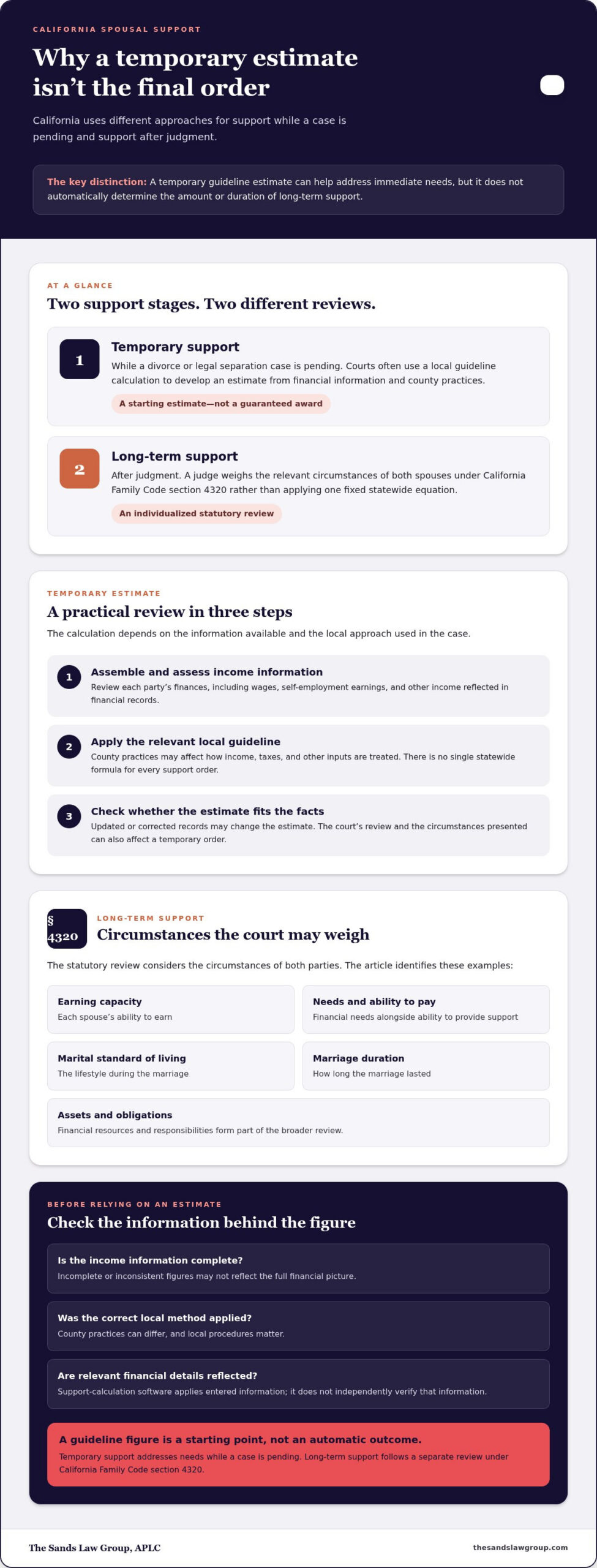
Temporary support starts with a local guideline estimate; long-term support requires a judge to weigh the statutory circumstances under Family Code section 4320. That distinction helps explain why an early order and a final judgment may differ. Identifying which order is at issue gives you a clearer basis for reviewing the financial information and questions that matter in your case.
How Do California Courts Assess Temporary Spousal Support?
A temporary support estimate can feel decisive when you’re planning for housing, bills, and other immediate expenses. It’s more useful to view it as a working calculation based on the financial information available and the local approach used in the case, not as a guaranteed result. If you’re researching how is spousal support calculated california, focus first on the information behind the estimate and how it will be reviewed.
Which financial inputs may affect a temporary estimate?
The process generally begins with information about each party’s income and finances. Depending on the case, that may include wages, self-employment earnings, and other income reflected in financial records. The local calculation method can also affect how income, taxes, and other inputs are treated. An estimate based on incomplete or inconsistent figures may not reflect the full picture.
Courts and parties may use support-calculation software to apply a guideline, but the software doesn’t independently verify the information entered. For example, if one spouse’s reported earnings leave out income shown in other records, correcting the input may change the result. Treat a sample calculation as an estimate, not a prediction of what a judge will order.
Why can temporary guideline figures change?
A practical review has three steps: assemble and assess income information, apply the relevant local guideline, and examine whether the resulting estimate fits the circumstances presented. If updated records clarify earnings or other inputs, the estimate may need to be recalculated. The court’s review and the facts of the case can also affect a temporary order. The guideline figure is a starting point, not an automatic outcome.
A temporary guideline estimate is not a promise of the final support outcome. Temporary orders address financial needs while a case is pending. A final support decision serves a different purpose and follows a separate legal analysis. For that later determination, the court considers statutory factors under California Family Code § 4320, rather than simply carrying a temporary estimate forward.
Before relying on a figure, ask whether the income information is complete, whether the correct local method was applied, and whether the estimate accounts for the relevant financial details. County practices can differ, so the local procedures for the case matter. The Sands Law Group, APLC represents both paying and receiving parties in support matters, helping clients assess financial inputs and understand their options. If you’re weighing a temporary estimate, you can discuss your support concerns with the firm.
What Factors Shape Long-Term Spousal Support in California?
Long-term support isn’t calculated by plugging the spouses’ incomes into a single equation. Under California Family Code section 4320, the court considers the circumstances of both parties and weighs them together. That’s why asking “how is spousal support calculated california” doesn’t have one numerical answer for every case.
The statutory analysis includes the marital standard of living, each spouse’s earning capacity, the supported spouse’s needs, and the supporting spouse’s ability to pay. The court also considers factors such as each party’s assets and obligations, the length of the marriage, and the age and health of each spouse. The California Courts’ guide to spousal support offers an overview of these considerations and how they inform a long-term order.
These factors aren’t points in a scoring system. A particular asset, income difference, or period of unemployment doesn’t automatically determine the result. The court evaluates the evidence in context, including how the spouses’ financial circumstances developed during the marriage and what each may reasonably need or be able to contribute after separation.
How do need, ability to pay, and earning capacity fit together?
The court considers the supported spouse’s needs alongside the other spouse’s ability to pay. Earning capacity may also matter, but it isn’t automatically treated as actual income. A spouse’s health, employment history, and current work circumstances may help explain whether they can earn more than they presently do. Relevant evidence helps the court assess what is realistic rather than rely on assumptions about either party’s finances.
Does the length of the marriage determine how long support lasts?
Marriage duration is relevant, but it doesn’t produce a universal calculation of support duration. California law generally treats a marriage of 10 years or more as a marriage of long duration for purposes of the court’s continuing jurisdiction over support. That jurisdictional presumption does not mean support automatically continues for life or require the court to set a particular termination date. The facts and the order still matter.
Likewise, a shorter marriage doesn’t create an automatic end date based on a simple fraction of the marriage’s length. The court considers duration alongside the other statutory circumstances when deciding support and its terms. For either spouse, the question is not just how long the marriage lasted, but how that history, current financial needs, resources, and ability to earn fit into the full section 4320 analysis.
What Records Help You Understand a California Support Calculation?
Organizing financial records can make a support discussion more focused, especially when you and your spouse have different views of income or household expenses. If you’re asking “how is spousal support calculated california,” reliable documents can clarify which financial details are established and which need further explanation.
Which financial records should you organize first?
Start with records that show your current financial picture and how it has changed. A practical initial checklist may include:
- Recent pay statements or other records showing income, along with available tax returns.
- Current information about recurring expenses, such as housing, utilities, insurance, and debt payments.
- Documents that help explain self-employment or other recurring income, if relevant.
- Employment records or correspondence that explain a job change, reduced hours, or another significant shift in earnings.
Keep the records in date order and note important changes, such as when employment or income changed and which documents support that timeline. Requirements vary with the case and court process, so this checklist is a starting point, not a complete list of documents required in every matter.
Complete, consistent records make it easier to spot discrepancies, missing information, or questions about whether a figure reflects current circumstances. Don’t hide, alter, or selectively present financial information. Doing so can undermine a clear assessment of the facts and distract from the issues the court needs to evaluate.
How should you prepare for a support discussion?
Separate documented facts from assumptions. For example, distinguish current earnings shown in records from a belief about what either spouse might earn in the future. Then prepare focused questions about the issues that remain unclear:
- Is the discussion about temporary support while the case is pending, or support after judgment?
- Which income, expense, or other financial inputs are disputed, and what records address them?
- What information or procedural step is needed next?
Keep support analysis distinct from property division and child support. Those issues may involve overlapping financial information, but they serve different purposes and are assessed separately. For information about the separate child-support process, review the article on California child support on this site.
The Sands Law Group, APLC represents both parties who pay support and those who receive it. An organized record set can help counsel identify relevant questions, assess the financial facts, and prepare for negotiation or court proceedings without treating an estimate as a guaranteed outcome. Schedule a discussion about your spousal support records.
How Can California Spousal Support Counsel Help You Evaluate Your Options?
Temporary support estimates and long-term support decisions call for different analysis. A temporary estimate may depend on financial inputs and local guideline practices, while a final order involves weighing the relevant statutory circumstances. Understanding that distinction is a useful starting point, but it doesn’t resolve how those rules apply to your particular facts.
What can a focused legal review clarify?
A focused review by a California spousal support lawyer can connect financial records with the issues that matter to the support question. Counsel can help identify disputed income or expense information, consider how the statutory factors relate to the circumstances, and assess whether an estimate reflects the available evidence. The Sands Law Group, APLC represents both people who pay spousal support and people who receive it, and assists with support negotiations and court proceedings as appropriate.
General information can explain how is spousal support calculated california, but an article can’t determine an individual support order. The result depends on the specific financial evidence, the kind of order being considered, and the court’s assessment of the relevant circumstances. Individualized legal guidance can help you identify the questions central to your situation without promising a particular amount or outcome.
What should you bring to an initial support consultation?
Preparation doesn’t need to be complicated. Bring what you have and note what remains unavailable or unclear. A few organized materials can make it easier to focus the discussion:
- Recent income and expense records, along with relevant tax documents.
- Any existing temporary or final support orders, if applicable.
- A brief timeline of important changes in income, employment, or expenses.
- A concise list of questions, including whether the issue concerns temporary support or a final order.
It may also help to separate confirmed facts from expectations about future income, employment, or support. That distinction gives counsel a clearer basis for identifying what can be addressed with existing records and what may need additional information.
The Sands Law Group, APLC handles spousal support matters in Los Angeles, Riverside, San Bernardino, and Kern counties. If you’re unsure how to interpret an estimate, preparing to negotiate, or responding to a support request, you can schedule a discussion about your support options. A measured review of your circumstances can help clarify the issues and possible next steps.
Take the Next Step Toward Clarity
Understanding how is spousal support calculated california begins with recognizing that a temporary estimate and a long-term support decision follow different approaches. Accurate, organized financial records can clarify the income, expenses, and circumstances that matter, while long-term decisions involve weighing statutory factors rather than relying on one fixed formula.
Your situation deserves an assessment grounded in its actual financial details. The Sands Law Group represents both paying and receiving parties in spousal support matters and handles negotiations and court proceedings. The firm serves Los Angeles, Riverside, San Bernardino, and Kern counties.
If you’re weighing an estimate, preparing for negotiations, or responding to a support request, a focused discussion can help you identify relevant questions and understand possible next steps without assuming a particular outcome. Schedule a consultation to discuss your California spousal support questions.
With clear information and thoughtful guidance, you can approach the decisions ahead with greater confidence.
Frequently Asked Questions
Is there a formula for spousal support in California?
No single statewide formula determines every California spousal support order. Temporary support may be estimated using local guidelines, while long-term support is decided by weighing statutory factors and the circumstances of both spouses. If you’re searching “how is spousal support calculated california,” the key distinction is which type of order is being considered. A temporary estimate can help inform a pending case, but it doesn’t dictate the final judgment.
How is temporary spousal support calculated in California?
Temporary support estimates generally begin with financial information for both spouses, then apply the relevant local guideline. Courts or parties may use calculation software, but the estimate depends on accurate inputs and the method used locally. Updated or corrected income details can change the figure, and a judge may consider the circumstances of the case. A guideline estimate is a starting point, not a guaranteed award or prediction of the final order.
How do California courts calculate long-term spousal support?
For long-term support, California courts weigh statutory considerations under Family Code section 4320 rather than applying one fixed statewide equation. Relevant circumstances include the marital standard of living, each spouse’s earning capacity, needs, ability to pay, assets, obligations, and marriage duration. The court considers these factors together; no one item automatically determines the amount or duration. The outcome depends on the evidence and the specific circumstances of the case.
Does a ten-year marriage mean spousal support lasts for life in California?
No. A marriage of at least ten years is generally considered a marriage of long duration for the court’s continuing jurisdiction over support, but it doesn’t guarantee lifetime payments. The court may retain authority to address support without setting a termination date, yet duration depends on the facts and the order. Marriage length is one factor in the broader analysis, not an automatic formula for how long support must continue.
Can spousal support be calculated using an online calculator?
An online calculator can offer a rough estimate for temporary support if it reflects the applicable local method and you enter accurate financial information. It can’t reliably account for every disputed input or predict how a judge will assess the case. It also won’t replace the individualized statutory analysis required for long-term support. Treat a calculator result as an estimate to help frame questions, not as a promised order or negotiating position.
What financial information matters when determining spousal support?
Relevant information may include each spouse’s income, recurring expenses, assets, financial obligations, and records explaining changes in employment or earnings. For long-term support, evidence about earning capacity, health, and the marital standard of living may also matter. Organize recent income documents, tax records, expense information, and any existing support orders. Complete, consistent records can help distinguish documented facts from assumptions and identify questions that need further review.
Is spousal support different from child support in California?
Yes. Spousal support concerns financial assistance between spouses or former spouses, while child support is a separate obligation for a child’s benefit and follows its own rules. The issues may involve some overlapping financial information, but one calculation does not determine the other. The Sands Law Group handles family-law matters, including support issues, in Los Angeles, Riverside, San Bernardino, and Kern counties, representing clients in negotiations and court proceedings.

Article by
Thomas D. Sands, Esq.
Thomas D. Sands is the founder and CEO of The Sands Law Group, APLC. A California attorney with more than two decades of experience, he represents clients in divorce and family law matters as well as civil litigation and real property disputes. His approach emphasizes attentive, practical, and cost-conscious representation.
Sands is a 2023 Litigator of the Year honoree of the American Institute of Trial Lawyers and a 2023 Lawyer of the Year honoree of the American Institute of Legal Professionals. His firm has also received recognition among the 2025 Best Law Firms in America, a 2026 Benchmark Best of award, and a 2026 Law Firm of the Year honor.
Article reviewed by
Thomas D. Sands, Esq.
Thomas D. Sands is the founder and CEO of The Sands Law Group, APLC. A California attorney with more than two decades of experience, he represents clients in divorce and family law matters as well as civil litigation and real property disputes. His approach emphasizes attentive, practical, and cost-conscious representation.
Sands is a 2023 Litigator of the Year honoree of the American Institute of Trial Lawyers and a 2023 Lawyer of the Year honoree of the American Institute of Legal Professionals. His firm has also received recognition among the 2025 Best Law Firms in America, a 2026 Benchmark Best of award, and a 2026 Law Firm of the Year honor.
TOLL-FREE: 855-SANDS4U