

A contested divorce starts when one spouse files a Petition for Dissolution of Marriage, form FL-100, and a Summons, form FL-110. A contested divorce lawyer in Los Angeles can help you understand the filing process and prepare for disagreements over custody, support, or property. To file in Los Angeles County, a spouse must have lived in the county for at least three months before filing the petition, according to the Superior Court of California, County of Los Angeles.
When you and your spouse disagree, the uncertainty can reach far beyond court paperwork. It may affect your children’s routines, financial stability, and plans for the future. Those concerns are real, and understanding the contested divorce process in Los Angeles can help clarify the decisions ahead.
This article explains how a contested divorce begins and how California law may shape custody, property division, settlement negotiations, and trial. You’ll also learn how case-specific strategy can help address disputed issues and what to expect as the matter moves forward.
Key Takeaways
- A California divorce begins with filing the required petition and summons; understanding the first steps can help you prepare for what follows.
- Custody decisions focus on the child’s best interests, while a clear parenting plan can address decision-making, visitation, and support.
- Organizing records of assets and debts helps clarify what needs to be classified and resolved during property division.
- In Los Angeles, spouses married for 5 years or less may qualify for summary dissolution if they meet additional criteria, including having no real property or children, according to California Courts.
- Negotiation may resolve disputed issues, but a case that proceeds to trial requires a focused strategy for presenting those disagreements to the court.
How Is Child Custody Determined After A Divorce?
Parents can agree on custody, visitation, and support, or ask the court to resolve disagreements. If they cannot agree, California judges consider factors under Family Code sections 3011 and 3020.
Custody, Visitation, and Support Agreements
A written parenting agreement can set out legal custody, physical custody, visitation, and child support. Legal custody concerns decisions for a child; physical custody and visitation describe where the child spends time. Before agreeing, consider how the proposed schedule fits school, activities, transportation, and each parent’s routine. For example, a plan can specify weekday exchanges and how parents will share school information.
Clear terms can reduce conflict by making responsibilities easier to follow. Specify where exchanges happen, how parents communicate about schedule changes, and how they handle important decisions. Address child support separately and ensure the proposed amount and arrangements are clearly recorded. In a divorce involving minor children, the filing includes UCCJEA form FL-105.
Custody Disputes and Parenting Plans
When parents disagree, identify each disputed point rather than treating custody as one broad conflict. One spouse may seek more parenting time, while the other questions how exchanges or major decisions will work. A parenting plan can describe a regular schedule, holidays, communication, and a process for discussing changes. Specific examples make competing proposals easier to assess.
If agreement remains out of reach, California judges consider the factors in Family Code sections 3011 and 3020. Organize information about the child’s routines and each proposed schedule. Keep records relevant to a specific disagreement, such as missed exchanges or conflicting school commitments. Focus proposals on the child’s needs, not on punishing the other parent.
Child support is separate from custody, though parenting time can affect its calculation. Los Angeles child support calculations may consider each parent’s income or ability to earn, deductions, and time spent with the child. Gather income records, information about deductions, and a clear account of the current parenting schedule. These details help explain how a proposed support arrangement relates to the family’s circumstances.
Spousal support is separate from child support; the two address different financial relationships. When discussing family law issues, prepare questions about both forms of support and identify any proposed parenting arrangement. If a dispute involves custody, visitation, or support, separate each issue and note what resolution would address the child’s practical needs. This preparation gives discussions a clearer starting point.
California community property division
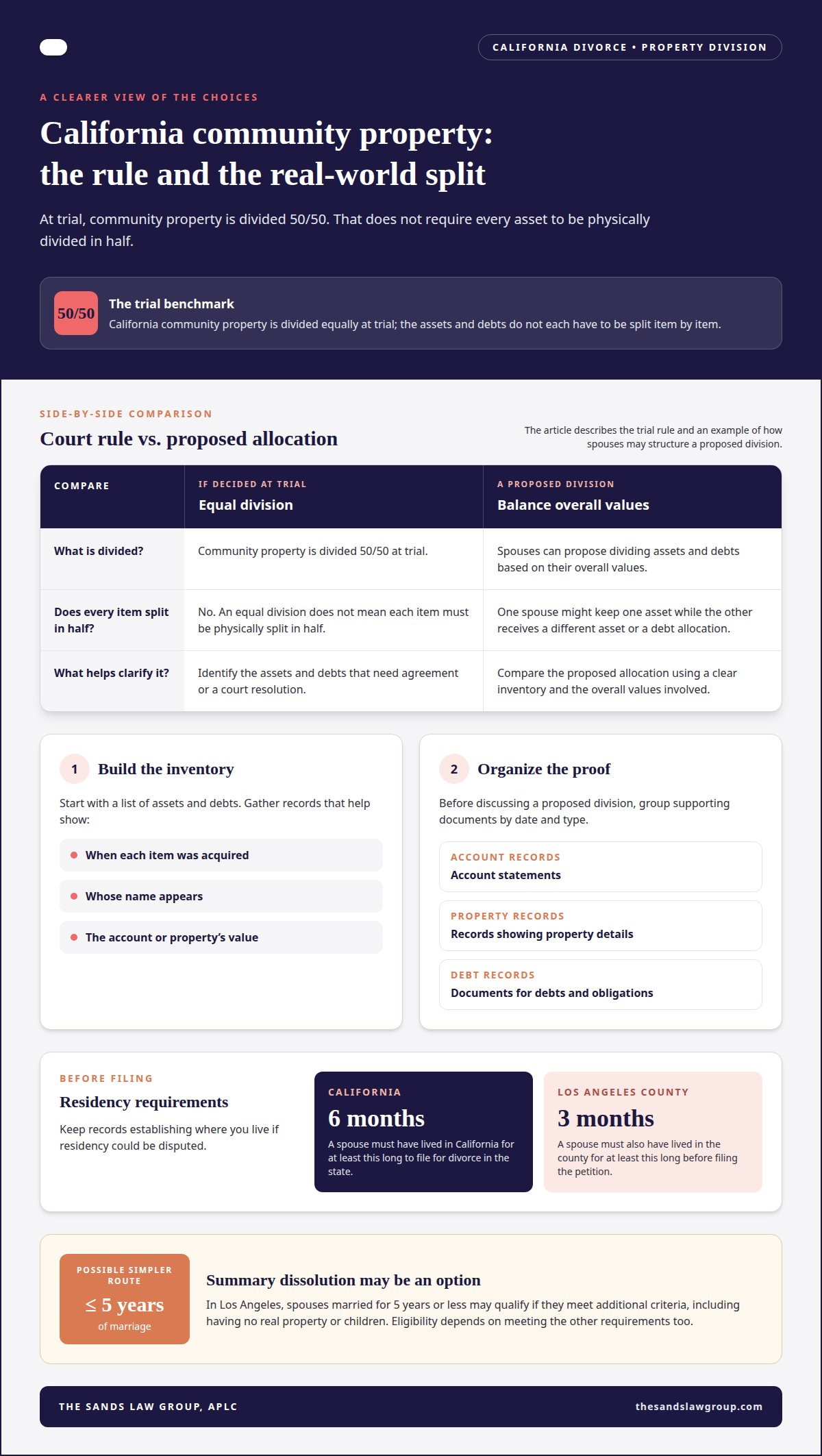
Property division can be difficult because divorce affects finances, housing, and children’s stability at once. Start by listing assets and debts, then gather records showing when each was acquired, whose name appears, and what the account or property is worth. These details help identify what needs agreement and which decisions may require a court resolution.
At trial, California community property is divided 50/50. That does not mean each item must be split physically in half; spouses can propose a division of assets and debts that accounts for their overall values. For example, one spouse might keep an asset while the other receives a different asset or debt allocation. A clear inventory makes those proposals easier to compare.
Residency rules matter before filing. A spouse must have lived in California for at least six months to file for divorce in the state. In Los Angeles County, the Superior Court of California, County of Los Angeles says a spouse must also have lived in the county for at least three months before filing the petition. Keep records establishing where you live if residency could be disputed.
Some couples may qualify for a simpler process. In Los Angeles, spouses married for 5 years or less may qualify for summary dissolution if they meet additional criteria, including having no real property or children, according to California Courts. Eligibility depends on meeting the other requirements too, so compare the process with the issues your case must resolve.
Children affect the available path and the decisions involved. California judges consider factors in Family Code sections 3011 and 3020 when parents cannot agree on custody. A specialist can help you organize proposals around the children’s needs while separating parenting questions from property and debt disagreements.
What are the court filing fees and other costs for divorce in Los Angeles? Court filing fees and other case costs depend on the filings and services involved. Expenses may also arise from serving documents, obtaining records, or resolving contested financial issues.
What is the average timeline for a contested divorce in Los Angeles County? The timeline depends on the issues in dispute, how quickly financial information is exchanged, whether spouses reach agreements, and court scheduling.
How can you find free or low-cost divorce legal help in Los Angeles? Court self-help resources and nonprofit legal aid may be options. Prepare a concise list of questions and financial records to make each conversation more useful.
Before discussing a proposed division, organize account statements, property records, and debt documents by date and type. If you need guidance on how property issues fit into your divorce, you can schedule a consultation about your case.
What Are California’s Divorce Laws?
Property and debt decisions can shape your finances long after a marriage ends. A written agreement helps define what each spouse will receive or remain responsible for.
Property and Debt Agreements
Start an agreement with a complete inventory of assets and debts, then compare each item’s value with its supporting records. Include homes, vehicles, bank accounts, loans, and credit balances, even when an account is held separately. For example, a mortgage statement and a current home valuation help clarify what spouses are discussing. Record disputed items separately so unresolved questions don’t get obscured by broader terms.
Review the proposed terms as a connected plan, not as isolated choices. A spouse accepting a vehicle, for instance, should understand any loan balance assigned with it. Write down who receives each asset, who pays each debt, and what steps remain, such as transferring an account. Clear language makes the agreement easier to review and reduces ambiguity about each spouse’s responsibilities.
Property and Debt Division
When spouses can’t agree, separate the issues into categories: ownership, value, debt responsibility, and proposed division. Then identify records supporting each position, such as account statements, purchase documents, or loan paperwork. A disagreement about a business interest, for example, may require careful review of its records before spouses can compare proposals. Don’t treat an estimated value as an established fact.
California community property is divided equally if the case goes to trial. Spouses can still negotiate a different distribution through an agreement addressing their assets and debts. Compare the total value of each proposed allocation, rather than focusing on just one item. A spreadsheet can show assets and liabilities side by side, making tradeoffs visible before either spouse accepts final terms.
Use a consistent method to organize documents: label each record by account or property, date, and issue. Keep statements for separate accounts apart from household bills, and note any missing records. This structure helps a law firm or other reviewer follow the financial picture without confusing one transaction with another.
For each disputed item, write a short summary of the disagreement and the outcome you propose. For example, note whether spouses disagree about a vehicle’s value, who should keep it, or responsibility for its loan. A focused list can guide a legal discussion and keep it from drifting into unrelated concerns.
Before signing, read the agreement from beginning to end and compare every item with the inventory. Confirm that asset assignments, debt responsibilities, and required next steps are described consistently. If one spouse keeps a home while the other assumes a loan, make sure the written terms address both parts of that arrangement.
Attorney representation and settlement negotiations
Disputed issues can affect finances, parenting arrangements, and daily decisions. A divorce attorney can help organize those issues and represent you through the process.
Attorney Representation
A contested divorce lawyer in Los Angeles can represent you through filings, negotiations, and disputed court issues. The attorney helps identify what needs resolution, organize supporting information, and explain the options available for each issue.
How do you choose a Los Angeles contested divorce attorney? Look for a family law practice that can explain its approach to your specific disputes, such as parenting arrangements or asset division. In a case evaluation, ask how the attorney will communicate, prepare your case, and assess settlement proposals.
What does a contested divorce lawyer in Los Angeles do? The attorney advises you, prepares and reviews case documents, represents your interests in negotiations, and presents disputed issues in court when needed. Ask how the work will address the concerns that matter most to you.
Settlement Negotiations
Settlement discussions give spouses an opportunity to resolve some or all disputed issues without asking the court to decide each one. An attorney can organize proposals, explain their practical effects, and communicate your position while keeping the focus on a workable outcome.
Prepare for negotiation by listing each unresolved issue and the result you would consider acceptable. For example, separate disagreements about property, debt, support, and parenting rather than bundling them into one demand. Review any written proposal carefully, including how each term affects other parts of the agreement.
Even if a divorce began as contested, agreement on every remaining issue can move the matter toward an uncontested resolution. If only some issues settle, identify what remains disputed so discussions can continue without confusing settled terms with open questions.
Risks of Self-Representation
What are the risks of representing yourself in a contested divorce? You may have to manage filings, evidence, negotiations, and court presentations while also making consequential decisions. Overlooking a document, misunderstanding a proposal, or failing to explain a position clearly can complicate the process.
Before responding to a settlement offer, compare each term with your records and priorities. For example, consider how an asset allocation relates to an associated debt, rather than judging either term alone. If you represent yourself, keep copies of documents, track court instructions, and prepare a concise account of each unresolved issue.
An attorney’s role is not simply to argue. Representation also means helping you understand choices, distinguish priorities from negotiable details, and prepare for the next step. Bring organized records and a written list of questions to a case evaluation. That preparation helps focus the discussion on your circumstances and the decisions ahead.
Customized divorce strategy and litigation
A divorce strategy should reflect the issues involved, your priorities, and the available evidence. Separate each dispute so negotiations and court preparation focus on decisions that affect your future.
Customized Divorce Strategy
Begin with a written issue list covering parenting, support, property division, and any other unresolved matter. For each issue, note your preferred outcome, the facts supporting it, and the records that could clarify the disagreement. A parent disputing a proposed schedule, for example, can identify school routines and transportation needs.
Next, distinguish essential goals from areas where compromise may work. If spouses disagree about a home and its associated debt, assess both together rather than treating them as unrelated questions. This helps keep a settlement proposal grounded in the full financial situation.
A thoughtful strategy also anticipates how the other spouse may respond. Organize documents by issue, prepare a concise explanation of your position, and identify what additional information could change your view. This approach helps you make deliberate decisions instead of reacting to each new proposal.
Divorce Litigation
If negotiations don’t resolve a dispute, litigation gives each spouse a way to present contested issues to the court. In a contested Los Angeles divorce, the court makes orders at trial on all disputed issues. Those orders may address property, support, or parenting, depending on what remains contested.
Prepare by matching each disputed issue with the records and explanation supporting your position. For example, gather documents showing an asset’s ownership or value, then state what decision you’re asking the court to make. Keep the presentation focused; unrelated grievances can distract from the issue the court must decide.
Before trial, review your requests for consistency. A proposed property division should account for both assets and related debts, while a parenting proposal should address the child’s practical routine. Separate agreed matters from unresolved ones so your presentation makes clear what still requires a court order.
Litigation is a formal process, but preparation can make your position easier to understand. Create a timeline of key events, maintain an organized file of relevant records, and update your issue list as agreements are reached. If one dispute settles, remove it from the list and focus on the remaining questions.
For example, if spouses resolve a support issue but still disagree about property division, keep the settled support terms distinct from the evidence and proposals concerning property. This prevents an agreed point from becoming confused with an active dispute.
If you’re weighing negotiation against trial, discuss the disputed issues and your preparation needs in a consultation about your divorce strategy.
The Sands Law Group, APLC: Divorce Legal Representation
The Sands Law Group, APLC provides divorce representation when disagreements over important decisions make the path forward difficult. Its attorneys also represent clients in child custody and visitation, spousal support, and property division matters. This representation can help you evaluate proposals, organize disputed issues, and prepare for litigation in Los Angeles, Riverside, San Bernardino, or Kern.
Before discussing your situation, write down the issues still unresolved and gather related documents. For example, note whether you need help addressing parenting arrangements, support, or division of property and debts. A focused list can keep the conversation centered on your priorities and the decisions ahead.
To discuss your circumstances with The Sands Law Group, APLC, book a Free Case Evaluation.
Move Forward With a Clear Next Step
A contested divorce can make every decision feel urgent, but not every issue needs attention at once. Identify the question that most affects your immediate stability, then consider what information would help clarify it. This focus can make the next conversation more useful and help keep short-term pressure from driving long-term choices.
Working with a contested divorce lawyer in Los Angeles can help you approach the process with a clearer understanding of your options and priorities. Begin by identifying your main concern, the outcome you hope to pursue, and any unresolved questions. The goal is not to have every answer ready, but to make the next step deliberate.
The Sands Law Group, APLC can discuss your situation and the legal support that may fit your needs. Schedule a conversation with The Sands Law Group, APLC to discuss what comes next. A considered step forward can help you regain direction, even while important issues remain unsettled.
Frequently Asked Questions
How Does The Divorce Process Start?
A California divorce case starts when a spouse files a Petition for Dissolution of Marriage, form FL-100, and a Summons, form FL-110. In Los Angeles County, residency requirements apply before filing. If the case involves minor children, include UCCJEA form FL-105 among the required filings. These forms begin the court process; they don’t resolve disagreements about parenting, support, property, or debts.
What Are the Benefits of Hiring a Certified Family Law Specialist?
A certified family law specialist may offer focused attention to issues such as custody, support, and property division. What matters in choosing representation is whether the attorney can explain the process clearly, identify disputed decisions, and help you prepare. For example, a case involving a parenting dispute and complicated assets may require attention to both issues. A designation alone doesn’t explain how an attorney will approach your circumstances.
How does the contested divorce process work in California?
A contested divorce proceeds through filing and resolution of disputed issues. Spouses may negotiate or reach agreements on some matters while continuing to disagree on others. In a contested Los Angeles divorce, the court makes orders at trial on all disputed issues. For instance, spouses might settle one financial question but still ask the court to decide another. Keeping settled terms distinct from open disputes clarifies what remains before the court.
What documents are needed to file for divorce in Los Angeles County?
The core California divorce filing includes the Petition for Dissolution of Marriage, form FL-100, and Summons, form FL-110. When minor children are involved, the filing also identifies UCCJEA form FL-105. Prepare accurate information about your marriage and the issues requiring court attention. The forms start the case; financial records and other documents may become relevant as spouses address property, debts, support, or parenting disagreements.
How are property and debts divided in a contested California divorce?
California community property is divided equally if the case goes to trial. Before proposing a settlement, distinguish assets from liabilities and consider the value of each item together. For example, compare a proposed asset allocation with any debt associated with it, rather than evaluating either in isolation. Spouses can negotiate terms that address their financial circumstances; unresolved property and debt disputes may proceed to a court decision.
How does California determine child custody and support in a contested divorce?
When parents cannot agree on custody, California judges consider factors under Family Code sections 3011 and 3020. Child support calculations in Los Angeles may consider each parent’s income or ability to earn, deductions, and time spent with the child. A practical example is documenting how a proposed parenting schedule fits a child’s school routine. Keep custody proposals focused on the child and support information organized by parent.
How can a contested divorce be settled through mediation or negotiation?
Spouses can use negotiation or mediation to work toward agreement on disputed issues, while leaving unresolved matters for the court. Before a discussion, separate each open question and write down the terms being proposed. For example, identify whether a proposal addresses property division, support, or parenting arrangements, and record any remaining disagreement. The Sands Law Group, APLC provides divorce representation. This website provides general information only, not legal advice. Contacting the firm does not create an attorney-client relationship until a formal agreement is signed.

Article by
Thomas D. Sands, Esq.
Thomas D. Sands is the founder and CEO of The Sands Law Group, APLC. A California attorney with more than two decades of experience, he represents clients in divorce and family law matters as well as civil litigation and real property disputes. His approach emphasizes attentive, practical, and cost-conscious representation.
Sands is a 2023 Litigator of the Year honoree of the American Institute of Trial Lawyers and a 2023 Lawyer of the Year honoree of the American Institute of Legal Professionals. His firm has also received recognition among the 2025 Best Law Firms in America, a 2026 Benchmark Best of award, and a 2026 Law Firm of the Year honor.









Leave A Comment