

What if a California move-away case turns less on the distance than on how the move would reshape your child’s life and your relationship with them? If you’re searching for a relocation move away custody lawyer california, you may be weighing practical decisions while trying to understand what your current custody order allows.
You may be worried that relocation will sharply reduce meaningful time with your child, or that your reasons for moving won’t be enough without a workable plan. California courts focus on the child’s best interests, and the existing custody arrangement can affect how a request is considered. Reviewing the order, documenting the child’s circumstances, and planning for parenting time can help you prepare.
This FAQ explains how courts approach move-away disputes, what evidence may help show the likely effect on your child, and how to develop a realistic parenting proposal. It also covers when to seek California custody counsel and what to discuss, whether you’re asking to relocate or responding to the other parent’s request. A focused, child-centered strategy can help you understand your options and protect your relationship with your child.
Key Takeaways
- A move-away dispute depends on how the proposed relocation would affect the existing custody and parenting-time arrangement, not simply the miles involved.
- Review your current custody order and the history of the case before deciding what steps to take.
- Organize evidence about your child’s relationships, routines, stability, education, and likely adjustment to the proposed change.
- Before requesting or challenging a move, preserve existing orders, document relevant facts, and develop a realistic plan for communication and parenting time.
- A relocation move away custody lawyer california can assess your custody posture, focus your evidence, and help you consider practical next steps for your family.
What Is a California Move-Away Custody Case, and When Does a Move Become a Dispute?
Deciding whether to move can involve housing, work, family support, and the relationships your child has built in their current community. Those pressures matter, but a change of address does not automatically become a custody dispute. The key question is how relocation would affect the parenting schedule and the child’s established connections.
A move-away dispute arises when a parent’s proposed relocation would materially disrupt an existing custody or parenting-time arrangement, making a change to the current plan or court review necessary. California has no universal mileage threshold that determines the issue. A move across town could make school-week exchanges impractical, while a longer move may have a different effect depending on the schedule and the parents’ circumstances.
A parent’s proposal does not itself change a custody order. Until the parents reach an agreement and properly formalize it, or a court changes the existing orders, the current arrangement remains important. Moving first and assuming the schedule will adjust later can create avoidable conflict and legal risk.
Does every move with a child require the other parent’s permission?
Not every change of address requires the other parent’s consent or a court hearing. The answer depends on the custody judgment or temporary orders, any relocation or notice provisions, and whether the move would interfere with the other parent’s time or require a revised schedule. Read the full order, including terms about address changes, travel, and parenting time. If the move may substantially disrupt the arrangement, get advice about applicable notice and court-review requirements before acting.
Why does the existing custody arrangement matter?
Sole or joint physical custody can shape the legal questions, but neither label alone guarantees a particular result. A final custody order may carry different significance from a temporary arrangement, and the court’s analysis depends on the order’s terms and the history of the case. Physical custody concerns where a child lives and spends time; legal custody concerns decision-making. For a fuller explanation, see legal custody versus physical custody in California.
For an interstate relocation, the issue may also include which state’s court has authority over future custody decisions. The Uniform Child Custody Jurisdiction and Enforcement Act (UCCJEA) provides a framework for jurisdiction involving multiple states. A parent searching for a relocation move away custody lawyer california can discuss how the current order, proposed move, and any interstate issues fit together before deciding on next steps.
How California Courts Evaluate Parent Move-Away Requests
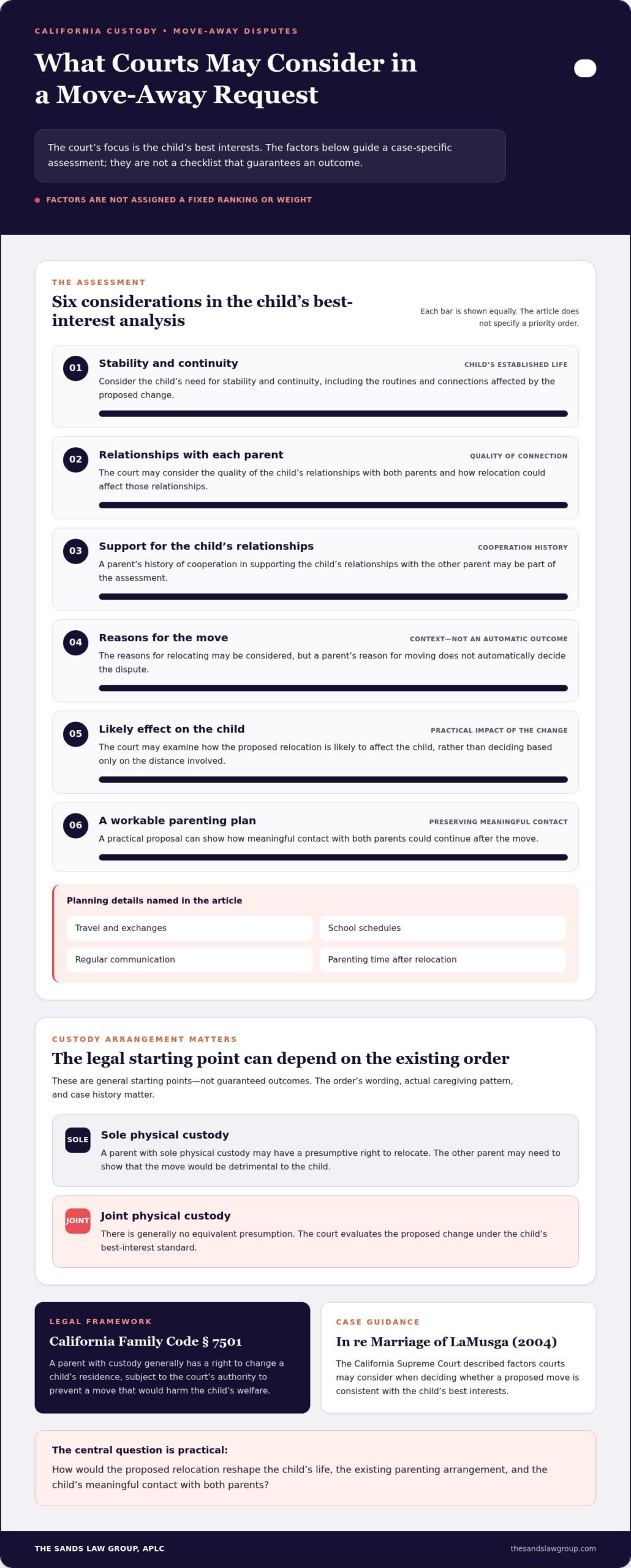
California Family Code section 7501 is a starting point: a parent with custody generally has a right to change a child’s residence, subject to the court’s authority to prevent a move that would harm the child’s welfare. That principle does not resolve every dispute. The court considers the current custody order, the change the moving parent is requesting, and the case’s procedural history before applying the relevant legal analysis.
In In re Marriage of LaMusga (2004), the California Supreme Court described factors courts may consider when deciding whether a proposed move is consistent with the child’s best interests. These factors guide a case-specific assessment, not a checklist that guarantees a result. No single fact, including a parent’s reason for moving, automatically decides the dispute.
How can sole or joint physical custody affect the legal analysis?
The existing arrangement may affect who must show what. In general, a parent with sole physical custody may have a presumptive right to relocate, while the other parent may need to show that the move would be detrimental to the child. With joint physical custody, there is generally no equivalent presumption, and the court evaluates the proposed change under the child’s best-interest standard. These are starting points, not automatic outcomes. The order’s wording, the actual caregiving pattern, and whether the court is reviewing a final order or a temporary arrangement all matter.
What are the LaMusga factors in a move-away case?
The LaMusga analysis can include the child’s need for stability and continuity, the quality of the child’s relationships with each parent, and each parent’s history of cooperation in supporting those relationships. The court may also consider the reasons for the move, its likely effect on the child, and whether a practical parenting plan can preserve meaningful contact with both parents. A proposal that addresses travel, exchanges, school schedules, and regular communication can help show what the change would mean in practice.
The governing standard depends on the facts and procedural posture, so general rules should not be treated as a prediction for an individual case. A relocation move away custody lawyer california can review the order and case history, assess which legal framework may apply, and help you prepare a child-focused position. If you’re weighing a request or response, you can schedule a conversation about your custody circumstances.
What Factors and Evidence Matter Most in a California Move-Away Dispute?
There is no automatic approval or denial based only on a parent’s reason for moving or the distance involved. The court focuses on the child’s best interests, including how the proposed change may affect important relationships, stability, routines, education, and adjustment. To prepare, connect each claim to specific facts about the child instead of relying on broad assurances or objections. For more on this guiding standard, see the child’s best interests in California custody cases.
The same issue may look different from each parent’s perspective. Evidence should help the court understand the child’s current life and what would realistically change:
| Issue | Evidence the moving parent may present | Evidence the other parent may present |
|---|---|---|
| Parent-child relationships | Proposed schedules for visits, calls, holidays, and continued involvement in important events. | Records of caregiving, regular contact, school participation, and the child’s established time with that parent. |
| Stability and routines | Details about proposed housing, childcare, family support, and how familiar routines could continue. | Information about the child’s current home, community ties, activities, and routines that relocation could disrupt. |
| Education and adjustment | Information about the potential school, educational supports, and transition plan. | School records or other relevant details showing the child’s current progress, needs, and adjustment. |
| Reason for moving | Documents explaining employment, housing, family support, or other practical circumstances behind the move. | Specific information about alternatives or how the proposed change may affect the child and existing relationships. |
What evidence may support the parent proposing relocation?
Organize records that explain why you are considering the move, then show how the proposed location could meet your child’s needs. Relevant materials may include employment information, housing details, family-support arrangements, and information about the potential school. A detailed parenting plan can address visits, regular communication, holidays, travel logistics, and how both parents can remain involved. The reasons for moving matter in context, but they do not decide the issue by themselves.
What evidence may matter to the parent opposing relocation?
Document your role in the child’s life, including caregiving, school involvement, regular contact, and established routines. Explain concrete effects on the child’s relationships and stability rather than relying only on distance or a general belief that the move is harmful. Where possible, identify alternatives that could address the moving parent’s needs while preserving the child’s important connections. A relocation move away custody lawyer california can help organize this evidence around the child’s circumstances and the specific proposal.
What Should You Do Before Requesting or Challenging a Move-Away?
Whether you’re planning a move or worried about losing time with your child, preparation can keep decisions grounded in the existing orders and your child’s needs. Before changing the child’s residence or schedule, take these steps:
- Preserve and review every current order. Gather custody judgments, temporary orders, parenting plans, and any provisions about relocation, notice, travel, or schedule changes. Do not assume a move is approved, and do not violate an order while a dispute is unresolved.
- Document the relevant facts. Keep records that explain the child’s current routine, caregiving, school involvement, and relationships. If you’re proposing a move, organize information about its purpose, housing, employment, and available support.
- Plan communication and a workable schedule. Keep communication with the other parent focused on the child and preserve relevant messages. Consider specific options for school breaks, transportation, virtual contact, holidays, and transitions instead of relying on a general promise to stay involved.
- Get case-specific legal advice before acting. Notice requirements, filings, and deadlines depend on current law, the existing orders, and the circumstances of the case. Review the requirements with counsel rather than relying on assumptions or a timeline from another family’s dispute.
If you’re the parent considering relocation
Support your proposal with documents explaining why you’re considering the move and how the child’s needs could be met in the new location. A detailed schedule should address school breaks, transportation responsibilities, virtual contact, and transitions between homes. A relocation move away custody lawyer california can review how your proposed changes relate to the current order and help you assess next steps before taking action that could affect custody.
If you’re responding to a proposed relocation
Record the child’s existing schedule and your meaningful participation in daily life, including caregiving, school activities, and regular contact. Preserve communications and identify specific ways the proposed move could affect the child’s routines or relationships. If you object, consider a prompt response through the appropriate court process, guided by advice tailored to your case.
A practical alternative may address the moving parent’s circumstances while preserving the child’s important connections, but it should be specific enough to evaluate. To discuss your situation and possible next steps, discuss your move-away custody concerns.
How Can a California Move-Away Custody Lawyer Help You Choose Your Next Step?
A move-away dispute can turn on details that are difficult to assess while you’re managing the personal strain of a possible relocation or reduced parenting time. Counsel can review the current custody order, case history, proposed change, and evidence to identify the legal framework that may apply. That assessment can clarify options and risks, but no lawyer can guarantee how a court will rule. The child’s circumstances and the record matter.
Depending on the case, representation may include preparing for negotiation, developing a workable parenting plan, handling court filings, and presenting your position if a hearing is necessary. The Sands Law Group, APLC represents parents in custody and visitation matters, including initial parenting plans and post-judgment modifications. The firm serves clients with cases in Los Angeles, Riverside, San Bernardino, and Kern County Superior Court. Local filing and hearing procedures can vary, but the governing legal analysis remains focused on California law and the child’s best interests.
What should you bring to an initial move-away consultation?
Bring current custody and visitation orders, pending court papers, and relevant written communications with the other parent. A clear timeline can help counsel understand the proposed move, current parenting schedule, and key events that may affect the dispute. Write down questions about evidence, negotiation, court procedures, and your immediate obligations under existing orders. A relocation move away custody lawyer california can use these materials to identify issues that need prompt attention and discuss realistic next steps.
How can a revised parenting plan protect a child’s relationships?
A revised plan should turn broad intentions into arrangements a family can follow. Depending on the child’s age, needs, established routines, and distance between homes, it may address school calendars, extended parenting periods, holidays, travel responsibilities, and regular communication. A plan that accounts for transportation and transitions makes the proposed schedule more concrete for both parents and the court. Learn more about California child visitation rights and parenting time.
If you’re considering a move or responding to one, individualized advice can help you understand how the order, evidence, and available options fit together. Schedule a consultation with The Sands Law Group, APLC to discuss your circumstances and possible next steps.
Take a Clear, Child-Centered Next Step
A California move-away dispute is shaped by the existing custody order, the practical effect of relocation, and the evidence showing how the proposed change may affect your child. A parent’s reason for moving matters, but so do the child’s stability, relationships, and the feasibility of a plan that preserves meaningful contact with both parents.
Before requesting or challenging a move, review your orders, document the facts, and do not assume the current schedule can change without agreement or court review. A relocation move away custody lawyer california can help you understand the legal posture of your case and prepare a realistic path forward.
The Sands Law Group focuses on family law and represents parents in custody and visitation disputes, including parenting plans and post-judgment custody modifications. For guidance tailored to your circumstances, schedule a consultation with The Sands Law Group. Careful preparation and informed legal support can help you take the next step with greater clarity while keeping your child’s needs at the center.
Frequently Asked Questions
Can a parent move away with a child without the other parent’s permission in California?
It depends on the custody orders, any applicable notice terms, and whether the move would disrupt the existing parenting schedule. A parent planning to relocate with a child generally must provide written notice at least 45 days before the planned move, but the order and circumstances matter. Review the full custody judgment or temporary orders before acting. If the other parent objects or the schedule must change, court review may be needed.
How far away does a parent have to move for it to be considered a move-away case?
California has no universal mileage threshold for a move-away case. The key issue is whether relocation would significantly affect the current custody or visitation arrangement. A move within the same city could create a dispute if it makes school-day exchanges or regular parenting time impractical. A longer move may affect the schedule differently depending on the child’s routine, travel demands, and each parent’s ability to maintain a meaningful relationship.
What factors do California judges consider in a move-away custody case?
Judges focus on the child’s best interests and the facts of the particular case. Relevant considerations may include the child’s relationships with each parent, stability, routines, education, adjustment to the proposed move, and each parent’s history of supporting the child’s relationship with the other parent. The reasons for relocating and the feasibility of a parenting plan also matter. No single factor automatically determines whether a move will be approved.
Can I stop my child’s other parent from moving away?
You can oppose a proposed relocation through the appropriate legal process, but an objection alone does not automatically prevent the move. The court reviews the existing custody arrangement, the requested change, and evidence about how relocation could affect the child. Preserve relevant records, such as your parenting schedule, caregiving history, and school involvement, and explain specific effects on your child rather than relying only on general concerns about distance.
What happens if parents share joint physical custody and one wants to relocate?
With joint physical custody, a parent generally does not have an automatic right to relocate with the child under a presumption favoring the move. The court considers whether the proposed change serves the child’s best interests, taking account of the current order, actual caregiving arrangements, and case history. The court may need to decide whether custody or parenting time should change. A realistic proposal should address travel, school schedules, holidays, and regular contact.
Can a child choose which parent to live with in a California move-away case?
A child does not simply choose the outcome of a move-away case. The court may consider a child’s wishes when appropriate, taking age and maturity into account. A child who is 14 or older generally has the right to address the court about their preference, unless the judge finds that doing so is not in the child’s best interests. The child’s views are one consideration, not a substitute for the court’s full assessment.
Do I need a lawyer for a California move-away custody case?
You are not required to have a lawyer, but legal advice can help you understand how the custody order, procedural history, evidence, and proposed parenting plan affect your options. A relocation move away custody lawyer california can help parents assess next steps, prepare filings, and address negotiation or court advocacy. This can be especially useful in cases before the Superior Courts in Los Angeles, Riverside, San Bernardino, or Kern County, where local procedures may differ.

Article by
Thomas D. Sands, Esq.
Thomas D. Sands is the founder and CEO of The Sands Law Group, APLC. A California attorney with more than two decades of experience, he represents clients in divorce and family law matters as well as civil litigation and real property disputes. His approach emphasizes attentive, practical, and cost-conscious representation.
Sands is a 2023 Litigator of the Year honoree of the American Institute of Trial Lawyers and a 2023 Lawyer of the Year honoree of the American Institute of Legal Professionals. His firm has also received recognition among the 2025 Best Law Firms in America, a 2026 Benchmark Best of award, and a 2026 Law Firm of the Year honor.
Article reviewed by
Thomas D. Sands, Esq.
Thomas D. Sands is the founder and CEO of The Sands Law Group, APLC. A California attorney with more than two decades of experience, he represents clients in divorce and family law matters as well as civil litigation and real property disputes. His approach emphasizes attentive, practical, and cost-conscious representation.
Sands is a 2023 Litigator of the Year honoree of the American Institute of Trial Lawyers and a 2023 Lawyer of the Year honoree of the American Institute of Legal Professionals. His firm has also received recognition among the 2025 Best Law Firms in America, a 2026 Benchmark Best of award, and a 2026 Law Firm of the Year honor.
TOLL-FREE: 855-SANDS4U