

What if a workable visitation plan matters less for how it looks on paper than for the stability it gives your child each week? When parenting time is uncertain or repeatedly disrupted, it can be hard to know what an existing order allows or what steps are available. A california child visitation rights lawyer can help you understand your options and pursue an arrangement that supports your child’s needs while making parental responsibilities clear.
It’s understandable to want a schedule that feels fair, but California courts focus on the child’s health, safety, and welfare. The right plan depends on your family’s circumstances, any current custody order, and whether the parents can agree. If plans are disputed, informal changes may not resolve the uncertainty.
This guide explains how California courts approach parenting time, how visitation arrangements may be established, changed, or enforced, and when an agreement may need court approval. You’ll also learn how family law representation can help you assess practical options and prepare for negotiation or court proceedings, so you can make informed decisions during a difficult family dispute.
Key Takeaways
- Understand how parenting time fits within a custody arrangement and why the current court order matters to your schedule.
- Learn which family-specific factors may shape a court’s approach, including your child’s safety, stability, and needs.
- Compare informal agreements with court-approved arrangements so you can weigh flexibility against clarity and enforceability.
- Before seeking a change or enforcement, review the order, document relevant events, and identify the outcome you’re requesting.
- A california child visitation rights lawyer can help you assess options, prepare for negotiations, and understand whether court representation may be appropriate.
California Child Visitation Rights: What Parents Need to Understand
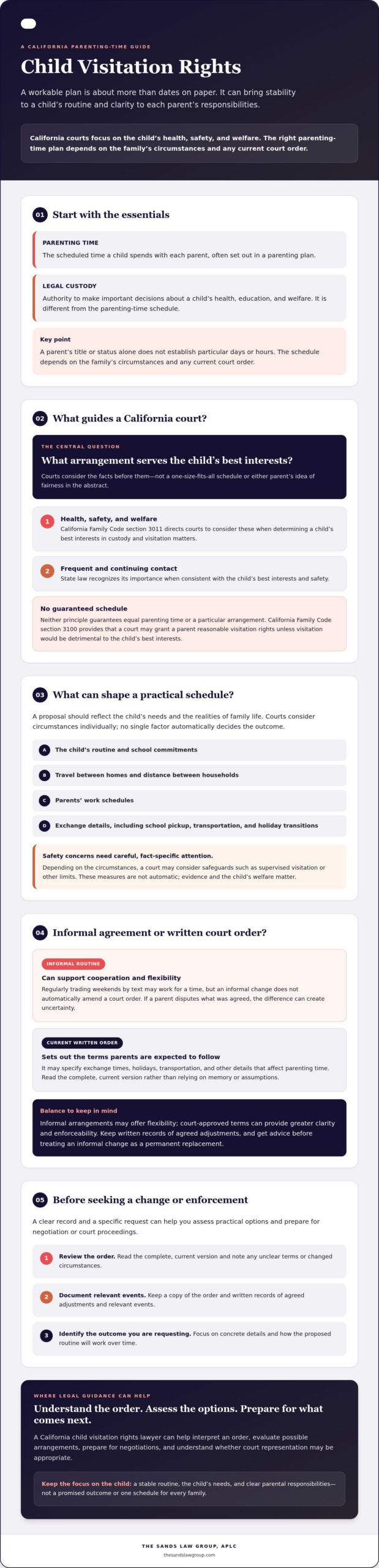
When parents separate, uncertainty about when a child will be with each parent can make everyday planning difficult. In California, “visitation” generally refers to a parent’s scheduled time with a child, often described as parenting time in a parenting plan. The schedule depends on the family’s circumstances and any current court order. A parent’s title or status alone doesn’t establish particular days or hours.
California Family Code section 3100 provides that a court may grant a parent reasonable visitation rights unless visitation would be detrimental to the child’s best interests. This is a general legal framework, not a guaranteed schedule for any individual family.
How visitation fits within a California custody arrangement
Parenting time addresses when a child spends time with each parent. Legal custody is different: it concerns authority to make important decisions about a child’s health, education, and welfare. Parents may share legal custody while following a specific schedule for where the child lives and when each parent has time with them. For more detail, see legal custody versus physical custody in California. A general overview of Joint Custody Arrangements can also help clarify the difference between shared decision-making and shared physical care.
Why the written order matters
If an order already exists, read the complete, current version before relying on memory or assumptions. It may specify exchange times, holidays, transportation, or other terms that affect how parenting time works. A california child visitation rights lawyer can help interpret the order and assess options if its language is unclear or circumstances have changed.
An informal routine, such as regularly trading weekends by text, may help parents cooperate, but it doesn’t automatically amend a court order. If the arrangement stops working or one parent disputes what was agreed, the difference between the written terms and the family’s routine can create confusion. Keep a copy of the order and written records of agreed adjustments. Get advice before treating an informal change as a permanent replacement. The goal is clarity about both the child’s routine and the terms parents are expected to follow.
How California Courts Approach Child Visitation and Parenting Time
Parents may hope for equal time or worry that a dispute will leave them with little contact. California courts don’t apply a one-size-fits-all schedule. The central question is what arrangement serves the child’s best interests, based on the facts before the court, rather than what either parent considers fair in the abstract.
California Family Code section 3011 directs courts to consider the child’s health, safety, and welfare when determining the child’s best interests in custody and visitation matters. State law also recognizes the importance of frequent and continuing contact with both parents when it is consistent with the child’s best interests and safety. Neither principle guarantees equal parenting time or a particular schedule.
What factors may affect a parenting-time arrangement?
A proposal should account for the child’s needs and the realities of family life. A young child’s routine, school commitments, travel between homes, parents’ work schedules, and the distance between households may all affect whether a schedule is practical and stable. Courts consider circumstances individually; no single factor automatically decides the outcome. Read more about the child’s best interests in California custody cases.
Make discussions more constructive by focusing on concrete details: school pickup times, transportation, holiday transitions, and how the proposed routine will work over time. A california child visitation rights lawyer can help evaluate possible arrangements and prepare a proposal tied to the child’s needs, without promising what a court will decide.
How safety concerns can affect visitation
Credible concerns about a child’s safety call for careful, fact-specific attention. Depending on the circumstances, a court may consider safeguards such as supervised visitation or other limits. These measures aren’t automatic; the evidence and the child’s welfare matter. Present concerns clearly and preserve relevant records rather than relying only on broad accusations.
If you believe a child is in immediate danger, contact emergency services or the appropriate local authorities. For non-emergency disputes, legal advice can help you understand what information may be relevant and what steps are available. The Judicial Branch of California also explains how to create a visitation court order, including formalizing an agreed plan. If you’re weighing a proposed schedule or safety-related concern, you can discuss your family’s circumstances with counsel.
Informal Agreement or Court Order: Which Visitation Option Fits?
A cooperative parenting arrangement can make day-to-day decisions easier, but flexibility alone may not provide enough certainty when schedules change or disagreements arise. The right approach depends on whether parents can communicate reliably, whether an order is already in place, and how much clarity the family needs. Not every disagreement requires a contested court hearing, but it helps to understand what each option can and can’t do.
| Arrangement | Potential advantages | Limits to consider |
|---|---|---|
| Informal agreement | Flexible and may help cooperative parents adjust plans as needs change. | Terms may be unclear or harder to rely on if a dispute develops; it doesn’t automatically replace an existing order. |
| Court-approved order | Sets out formal terms that parents can refer to when questions arise. | Changes may require further agreement or a formal court process, depending on the circumstances. |
When parents can agree on a visitation schedule
If communication is workable, parents may be able to develop a practical schedule together. Put the details in writing, including regular parenting time, exchanges, holidays, communication with the child, and how parents will request or confirm schedule changes. Specific terms can reduce misunderstandings about recurring issues such as pickup times or who provides transportation.
Before relying on an agreement, consider whether court approval is appropriate for your circumstances, particularly if a current order already governs parenting time. An informal understanding may support cooperation, but it doesn’t by itself change the order. The Judicial Branch of California provides information about creating a visitation court order.
When a lawyer may help resolve disagreement
Legal advice may be useful if parents interpret an order differently, repeated disruptions make the schedule unreliable, negotiations have stalled, or safety concerns affect proposed parenting time. A california child visitation rights lawyer can review the order, explain potential options, and help prepare a clear proposal that addresses the child’s routine and practical needs.
Seeking advice doesn’t mean you’ve chosen a contested hearing. Counsel may help parents pursue negotiation or another appropriate path, while explaining what formal court resolution could involve if agreement isn’t possible. The aim is to make informed decisions, not to escalate conflict by default. A family law attorney can help assess which approach fits the order and circumstances rather than treating every disagreement as a reason to litigate.
Changing or Enforcing a California Visitation Order: Practical Next Steps
A parenting-time problem may call for a change to the existing arrangement, or it may involve difficulty following the order already in place. Those are different concerns. Identifying which one applies can help you prepare for a more focused discussion with an attorney. Start with the written order, not assumptions or a partial recollection of its terms.
Preparing to discuss a modification
If you’re asking to change the schedule, organize information that explains what has changed and why a different plan may better serve your child. A change in circumstances may be relevant, but whether it supports a modification depends on the facts and applicable legal standards. Consider gathering:
- A complete copy of the current custody and visitation order, including any later changes.
- A proposed schedule that explains regular parenting time, exchanges, holidays, and practical logistics.
- Relevant communications and a concise timeline of developments since the order was made.
- Specific information about how the proposed arrangement would support your child’s routine and needs.
Focus on practical changes, such as a new work schedule, a move, or a child’s changing needs, rather than framing the request only as a disagreement with the other parent. Don’t withhold court-ordered parenting time or unilaterally disregard the order without first getting legal advice, unless immediate safety concerns require emergency assistance.
Responding to missed or disrupted parenting time
If the problem is that an existing order isn’t being followed, keep a factual record. Note the date and time of each missed exchange, what the order required, what occurred, and any relevant messages. Separate direct observations from assumptions, and save communications in their original form when possible.
Where it’s safe and appropriate, communicate calmly and in writing about the specific issue and a practical way to address it. Avoid involving the child in adult conflict. A request to modify an order seeks different terms; a concern about compliance asks how to address conduct under the current terms. Available options or remedies depend on the order, the evidence, and current law, so don’t assume a particular response is automatic.
A california child visitation rights lawyer can review the order, help distinguish modification from enforcement concerns, and explain options for negotiation or court proceedings. For guidance based on your circumstances, discuss your visitation concerns.
Choosing a California Child Visitation Rights Lawyer for Your Family
Choosing counsel is not simply about finding someone to appear in court. You need clear guidance about the order in place, the outcome you’re seeking, and practical options for moving forward. A california child visitation rights lawyer may help you prepare for parenting-plan negotiations, consider a modification, or address a dispute through court proceedings when needed. A careful first conversation should leave you with a better understanding of your options, not a promise of a particular result.
Questions to ask before retaining visitation counsel
Use an initial consultation to assess whether the attorney understands your concerns and communicates in a way that works for you. Consider asking:
- How would you assess my current order and the outcome I’m seeking?
- What options might be available for negotiation, modification, or court resolution?
- How will you communicate updates, and what information should I provide?
- What fees and billing arrangements should I understand before deciding whether to proceed?
Bring the current order, relevant communications, and a concise account of the issue. A useful discussion should address your circumstances, including what is known, what still needs clarification, and what next steps may be appropriate. Ask questions about fees directly; don’t rely on assumptions about cost or what representation includes.
How The Sands Law Group may support parents
The Sands Law Group, APLC focuses exclusively on family law and represents parents in child custody and visitation matters. Its work includes helping parents establish initial parenting plans and pursue post-judgment modifications. Depending on the circumstances, family law representation may help you evaluate a proposed schedule, prepare for negotiations, or present your position in court. The firm serves Los Angeles, Riverside, San Bernardino, and Kern.
As you assess fit, look for a clear explanation of how counsel would approach your situation, what information is needed, and how possible paths differ. No attorney can promise a particular schedule or court outcome, but informed guidance can help you make decisions with a fuller understanding of the issues and process.
If you’re considering help with a custody or visitation matter, schedule a consultation with The Sands Law Group to discuss your circumstances and questions.
Take the Next Step Toward a Clearer Parenting Plan
A workable visitation arrangement depends on more than what feels fair in the moment. Review the current order, keep proposed changes focused on your child’s needs, and distinguish a request to modify the schedule from a concern that existing terms aren’t being followed. California courts consider each family’s circumstances, so no schedule or outcome is automatic.
If the order is unclear, parenting time is repeatedly disrupted, or you’re considering a change, a california child visitation rights lawyer can help you understand your options and prepare for negotiation or court proceedings. The Sands Law Group focuses exclusively on family law and represents parents in child custody and visitation matters. The firm serves Los Angeles, Riverside, San Bernardino, and Kern.
You don’t have to resolve every question before seeking guidance. Schedule a consultation with The Sands Law Group to discuss your circumstances and possible next steps. With clear information and a child-focused plan, you can move forward with greater confidence.
Frequently Asked Questions
What are visitation rights in California?
In California, visitation generally refers to parenting time within a broader custody arrangement. The specific schedule depends on the family’s circumstances and any current court order, so it isn’t identical in every case. Read the full order, including provisions for holidays, exchanges, and other conditions, rather than relying on a summary or past routine. If terms are unclear or disputed, seek advice tailored to your situation before making assumptions about what the order permits.
Can a parent deny court-ordered visitation in California?
Parents shouldn’t assume they can disregard an existing visitation order because conflict has arisen. The appropriate response depends on the order and circumstances, including whether there are urgent safety concerns. Keep factual records of relevant events and communications, and promptly seek qualified legal guidance about available options. Avoid withholding parenting time or taking unilateral action without advice, unless immediate danger calls for emergency assistance from appropriate services or authorities.
How can I change a child visitation order in California?
To change a court-ordered schedule, a parent generally needs to seek a formal change rather than rely on an informal adjustment to replace the order. The process and legal standard depend on the case and current law. Before seeking advice, gather the complete order, note relevant changes since it was made, and prepare a child-focused proposal explaining how the requested schedule could work. A family-law attorney can assess what options may fit your circumstances.
Does California automatically give parents equal visitation time?
No. Parents shouldn’t assume California automatically provides equal parenting time in every case. The arrangement depends on the child’s circumstances, applicable law, and any court order. A child-centered plan may address established routines, safety, school commitments, distance between homes, and practical exchange logistics. If you’re proposing equal time or concerned about the schedule being considered, get legal advice based on your family’s facts rather than relying on a general rule of thumb.
Can visitation be supervised in California?
Yes, supervised visitation may be considered in some circumstances, particularly when safety concerns call for safeguards, but it isn’t automatic. The court’s decision depends on the specific facts and its assessment of the child’s welfare. If you have concerns, document specific incidents and review the current order before taking action. A family-law attorney can help you understand what protective steps may be appropriate and how the existing order applies to your situation.
When should I contact a California child visitation rights lawyer?
Consider seeking advice when you can’t reach agreement, an order is unclear, circumstances have materially changed, or parenting time is repeatedly disrupted. A california child visitation rights lawyer can review the order, help assess options, and prepare you for negotiation or court proceedings as appropriate. The Sands Law Group focuses exclusively on family law and represents parents in custody and visitation matters in Los Angeles, Riverside, San Bernardino, and Kern. For immediate danger, contact emergency services.

Article by
Thomas D. Sands, Esq.
Thomas D. Sands is the founder and CEO of The Sands Law Group, APLC. A California attorney with more than two decades of experience, he represents clients in divorce and family law matters as well as civil litigation and real property disputes. His approach emphasizes attentive, practical, and cost-conscious representation.
Sands is a 2023 Litigator of the Year honoree of the American Institute of Trial Lawyers and a 2023 Lawyer of the Year honoree of the American Institute of Legal Professionals. His firm has also received recognition among the 2025 Best Law Firms in America, a 2026 Benchmark Best of award, and a 2026 Law Firm of the Year honor.








Leave A Comment