

You don’t have to turn every parenting decision into a negotiation. One way to understand how to deal with a difficult ex during co-parenting is to consider parallel parenting: both parents remain involved in their children’s lives while limiting direct interaction. Each parent handles day-to-day decisions during their own parenting time, which can reduce opportunities for conflict.
If communication with your former partner feels tense or unpredictable, it’s understandable to want a clearer, calmer way to manage practical details. Parallel parenting isn’t about shutting the other parent out. It creates structure that keeps the children’s needs central and gives adult disagreements less room to take over.
This article explains how to make communication and parenting arrangements more predictable, speak honestly with children without putting them in the middle, and set boundaries that support your well-being. It also covers ways to address ongoing problems while keeping the focus on stability and your children’s care.
Key Takeaways
- Use written, child-focused communication and clear parenting arrangements to reduce unnecessary conflict.
- Speak honestly with children in an age-appropriate way without criticizing their other parent or making them messengers.
- Pause before responding to provocative messages, and keep replies focused on essential parenting matters.
- Set practical boundaries around communication and make space for support that helps protect your emotional well-being.
- When cooperation is possible, discuss what your children need and make parenting-plan expectations clear.
1. What Is Parallel Parenting?
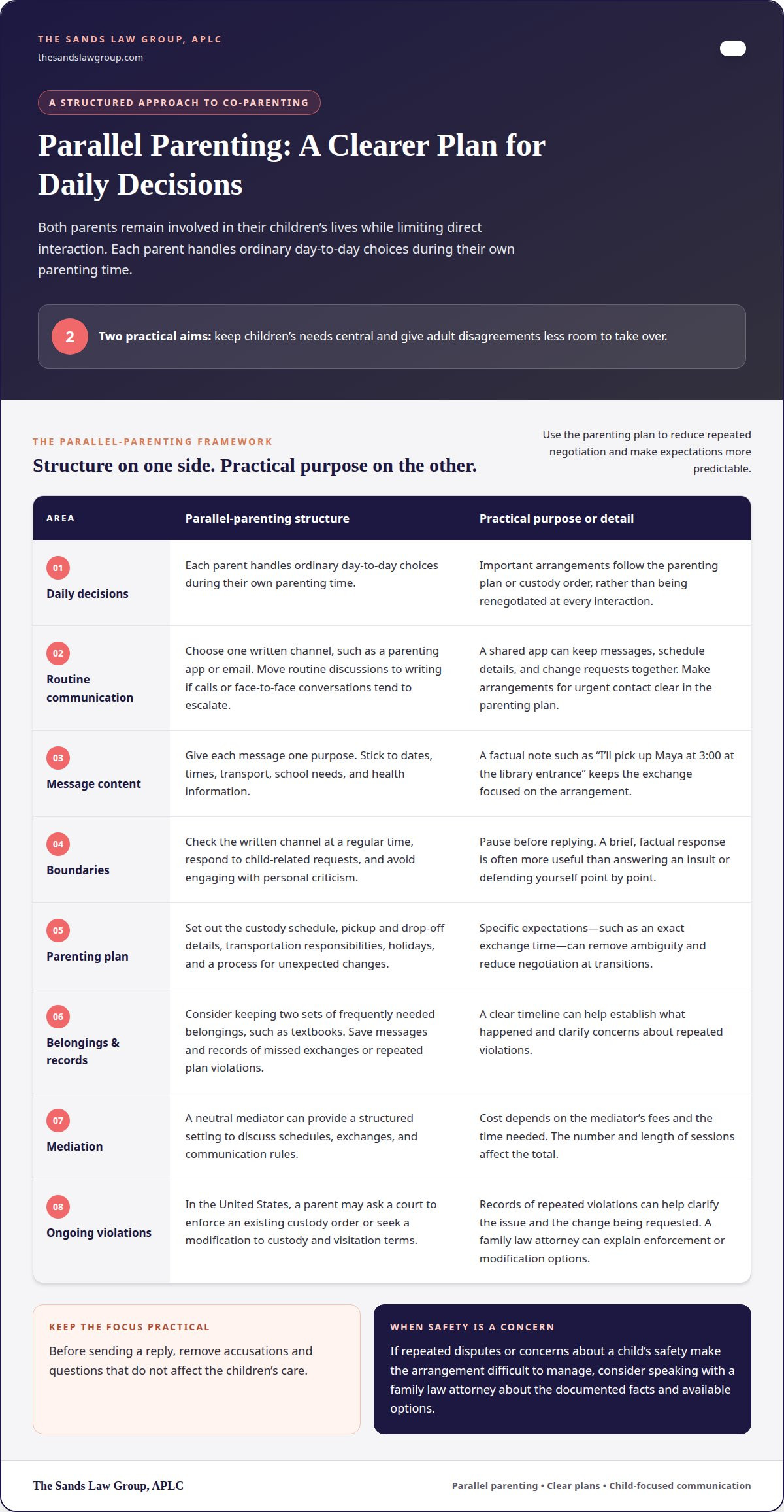
Parallel parenting allows both parents to remain involved while limiting direct interaction. It may suit situations where regular conversations lead to arguments instead of decisions. Each parent handles ordinary day-to-day choices during their own parenting time, while important arrangements follow the parenting plan or custody order.
Choose one written channel for routine communication, such as a parenting app or email. A shared app can keep messages, schedule details, and change requests together; email is another practical option. If calls or face-to-face conversations tend to escalate, move routine discussions to writing. Keep arrangements for urgent contact clear in the parenting plan.
Written communication works best when each message has one purpose. For example, write, “I’ll pick up Maya at 3:00 at the library entrance,” instead of reopening an argument about the last exchange. Stick to dates, times, transport, school needs, and health information. Before sending a reply, remove accusations and questions that don’t affect the children’s care.
Set boundaries that make communication predictable. Check the parenting app at a regular time, respond to child-related requests, and avoid engaging with personal criticism. A brief, factual reply is often more useful than defending yourself point by point. Save messages and records of missed exchanges or repeated violations of the plan. A clear timeline can help establish what happened.
Make the written parenting plan specific enough to reduce negotiation at each transition. Include the custody schedule, pickup and drop-off details, transportation responsibilities, holidays, and a process for unexpected changes. Agreeing on exact exchange times, such as 3:00, can remove ambiguity. Keeping two sets of frequently needed belongings, such as textbooks, can also prevent disputes over items moving between homes.
In the United States, a parent may ask a court to enforce an existing custody order or seek a modification to custody and visitation terms. Records of repeated violations can help clarify the issue and the change being requested.
Mediation gives parents a structured setting to discuss schedules, exchanges, and communication rules with help from a neutral mediator. The cost depends on the mediator’s fees and the time needed to address the disputes. The number and length of sessions affect the total.
Consider speaking with a family law attorney if repeated violations, escalating disputes, or concerns about a child’s safety make the current arrangement difficult to manage. An attorney can explain enforcement or modification options and help assess how documented facts relate to your custody order.
2. Telling children the truth without badmouthing
Children deserve honest answers, but they shouldn’t carry adult anger or be given details they can’t process. Explain changes in simple, age-appropriate language and focus on what affects their daily lives. For example, say, “Your parents disagree about the schedule, but we’re working on it,” rather than describing the argument or assigning blame.
Respond to questions truthfully without making the other parent the subject of an attack. When David’s son was 12 years old, David answered his questions honestly. The useful principle is to address what the child asked, not to volunteer every painful detail. You might say, “We’re having trouble agreeing, but this isn’t your fault, and you don’t need to fix it.”
Take a child’s report about the other home seriously, but seek to understand what happened before drawing conclusions. Children may misremember events or describe them dramatically, especially when upset. Listen without leading questions, thank the child for speaking up, and ask what they need right now. If clarification is appropriate, send the other parent a polite, non-accusatory message focused on the incident.
Keep children out of the conflict in practical ways. Don’t ask them to deliver schedule changes, gather information about the other parent’s home, or choose sides. Raise concerns directly with the other parent instead of asking your child to explain them. Avoid criticizing the other parent within the child’s hearing, even when you feel provoked.
Separate a parent’s difficult behavior from the child’s relationship with that parent. You can explain that yelling or unreliable arrangements are not acceptable without telling a child to reject or fear the other parent. Keep explanations specific: “Adults are responsible for speaking respectfully,” or, “You aren’t responsible for making us agree.” This gives children language for unhealthy behavior without drawing them into adult disputes.
If your ex repeatedly violates the custody agreement, keep a clear record of each incident and follow the existing order as much as possible. Documented, repeated violations may support a request for court enforcement or a change to custody and visitation terms.
Physical abuse, sexual abuse, or serious neglect calls for protective action, not simply a calmer conversation. Prioritize the child’s immediate safety and seek appropriate help; don’t ask the child to investigate or confront the other parent. For recurring custody problems, discussing custody options with a family law attorney can help you understand possible next steps.
3. Separating feelings from behavior
A difficult exchange can trigger anger, fear, or grief, especially when an old disagreement resurfaces. Separate the emotion from your next action: name what you feel, pause, then decide what response serves your child. Feeling insulted by a message, for example, doesn’t mean you need to answer the insult or change the parenting arrangement.
When considering how to deal with a difficult ex during co-parenting, separating facts from interpretations can help. Write down the observable behavior, such as “the pickup began late,” then note your interpretation, such as “my ex is trying to punish me.” The first describes what happened; the second assumes a motive. Keeping them distinct helps you respond to evidence rather than suspicion.
Respect doesn’t mean approving of your former partner’s choices or accepting repeated disruption. It means addressing conduct without attacking the person. Replace “You’re selfish and never cooperate” with “The school pickup was missed; please confirm the next exchange plan.” A specific request gives the other parent something concrete to answer.
Notice your own triggers and plan a response before the next difficult interaction. If schedule changes usually lead to a heated exchange, decide in advance to read the message, take a break, and respond only to the requested change. This pause can help separate a genuine parenting issue from anger about the relationship.
Not every difference in parenting style signals harmful behavior. One home may allow a 7:30 bedtime while the other uses 8:00; that disagreement alone doesn’t establish a safety concern. Focus on whether a choice creates a genuine risk for the child, rather than trying to make both households identical.
Mindfulness can help interrupt an automatic reaction. Before replying, take a slow breath and ask, “What does my child need from me right now?” If the answer is a calm transition or reliable routine, keep your actions aligned with that need, even when your ex’s tone feels provocative.
After a tense interaction, review your own behavior without taking responsibility for the other parent’s choices. Ask whether your words stayed factual, whether you followed the agreed arrangement, and whether you kept the child out of the disagreement. If you sent an angry message, return to the practical issue with a brief clarification instead of extending the argument.
Part of how to deal with a difficult ex during co-parenting is choosing a response practice and using it consistently. Separating facts from assumptions can help you make clearer decisions, maintain respectful boundaries, and keep adult feelings from directing your child’s day.
4. Setting boundaries and caring for yourself
A useful boundary defines which communication you’ll engage with and how you’ll respond. For example, answer messages about school, health, exchanges, or schedule changes, but don’t continue conversations about past relationship grievances. State the limit calmly and apply it consistently, so the other parent knows which issues need a response.
Choose a regular time to review parenting-app messages instead of checking alerts throughout the day. Identify requests that affect the child and respond directly to those. If a message feels provocative, pause before replying and draft a factual response. This routine reduces the chance that an angry exchange will take over your attention or disrupt time with your child.
The grey rock method means giving brief, unengaging responses and addressing only essential information. If your ex adds an insult to a question about a school pickup, answer the pickup question without defending yourself. “I’ll meet you at the agreed location” keeps the exchange focused. This approach doesn’t mean ignoring important information about the child.
Boundaries can also protect your privacy outside parenting conversations. You can block your ex on social media and adjust privacy settings to limit unwanted contact or exposure to personal updates. Keep necessary parenting communication on the agreed channel rather than letting online posts or comments become another argument.
Self-care includes finding support that lets you speak freely without involving your child. A trusted friend, counselor, pastor, or support group for divorced parents can provide space to process recurring disagreements. For example, discuss frustration about different household routines with an adult support person, then keep your child’s next exchange calm and predictable.
When disagreements concern minor preferences, distinguish discomfort from a genuine safety issue. If your ex chooses a different meal routine or bedtime, consider whether it creates an actual risk before turning it into a dispute. You can maintain your household’s routines without trying to control every choice in the other home.
During the first year of parallel-parenting, consistently document boundary violations and follow the communication limits you set. Save relevant messages, note repeated unwanted contact, and record whether a response was needed for the child’s care. A clear record helps you identify patterns instead of relying on memory after a tense exchange.
Review your boundaries when circumstances change, such as a new school schedule or repeated non-urgent messages. Keep any adjustment specific: explain which channel to use, what information belongs there, and when you’ll respond. A useful boundary protects your attention while preserving a dependable path for essential parenting communication.
5. Building a cooperative co-parenting relationship
Cooperation doesn’t require friendship or identical parenting styles. It starts with child-focused communication, specific requests, and a willingness to address practical needs without reopening old disputes. For example, begin by recognizing something the other parent does well, then raise one concern about the child’s schedule or care.
Create a detailed parenting plan that sets out the custody schedule, exchanges, transportation responsibilities, holidays, child-support payments, and a process for proposed changes or unexpected events. Clear terms reduce the need to negotiate routine details emotionally, especially when each parent understands what happens next.
Follow the existing custody order or agreement as closely as possible. If you want to swap weekends, ask the other parent and get mutual agreement rather than changing the schedule unilaterally. When both parents agree to a temporary change, put the revised dates and responsibilities in writing so the arrangement is clear.
A plan should also account for real life. Parents can try an arrangement and discuss changes if the schedule isn’t working. Keep the discussion focused on the child’s needs, such as school transportation or a difficult transition, rather than presenting a change as a judgment of the other parent.
When a child reports a concern, ask the other parent what happened through a polite, non-accusatory message before making accusations. For instance, write, “Sam mentioned leaving practice early. Can you tell me what happened?” This gives the other parent room to clarify while keeping the conversation centered on the child.
Reduce friction at exchanges by choosing a public location or arranging for a neutral third party to help with the handoff. Parents who have remarried can first address co-parenting disagreements with each other and ask stepparents to step back temporarily. This keeps the discussion between the parents responsible for the existing arrangement.
Some differences may remain. If a disagreement concerns a minor preference, such as a 7:30 or 8:00 bedtime, and neither choice creates a genuine safety concern, consider whether continuing the dispute helps the child. You can maintain your own household routines without demanding identical rules in both homes.
If communication repeatedly stalls, parents can discuss asking an attorney about a court-appointed parenting coordinator, a neutral professional who helps implement and follow custody orders. For guidance on parenting-plan concerns, schedule a conversation about your co-parenting arrangements.
The Sands Law Group, APLC: Divorce Legal Representation
The Sands Law Group, APLC provides Child Custody and Visitation Representation when ongoing conflict, repeated order violations, or unresolved schedule disputes call for legal guidance. The firm also represents people in divorce matters, including property division and spousal support, when those issues affect family arrangements.
Legal representation can help clarify how documented communication, custody terms, and recurring problems relate to your options. If you’re considering a change to a custody arrangement or need help addressing a dispute, bring the current order and relevant records to your discussion with The Sands Law Group, APLC. This can help focus the conversation on the issues and possible next steps in your circumstances.
Contact The Sands Law Group, APLC to discuss your co-parenting or custody concerns.
Move Forward With a Clearer Plan
Learning how to deal with a difficult ex during co-parenting can start with one practical decision: identify what needs attention now and what can wait. When disagreements affect custody arrangements, repeated conflict can make predictable routines harder to maintain for your children. Gather the current custody order and records related to the issue, then consider what outcome would support your family’s needs.
The Sands Law Group, APLC offers Child Custody and Visitation Representation and Divorce Legal Representation. The firm also handles Spousal Support Representation, which may be relevant when financial questions arise alongside family changes. Legal representation can help you understand the issues and consider a path forward without letting each difficult exchange dictate your decisions.
If you’re ready to discuss your circumstances, contact The Sands Law Group, APLC. Taking a thoughtful next step can help you move toward greater stability for yourself and your children.
Frequently Asked Questions
What Is Parallel Parenting?
Parallel parenting is an arrangement in which separated parents remain involved while minimizing direct interaction. It may help when joint discussions repeatedly become arguments or delay decisions. For example, parents might use separate routines for ordinary household choices while relying on their written custody arrangement for shared responsibilities. The aim is to reduce conflict around parenting logistics, not to remove either parent from the child’s life.
What is a Toxic Ex?
“Toxic ex” is an informal label, not a precise description of a person or a legal finding. Focus instead on observable behavior, such as repeated hostile messages, pressure on a child to take sides, or ongoing disruption of agreed arrangements. Describe specific events and their effect on parenting rather than relying on a label. This keeps discussions grounded in conduct and avoids name-calling.
How can you communicate effectively with a high-conflict ex while co-parenting?
Make each message brief, neutral, and limited to one child-related issue. For example: “The school meeting is Thursday. Can you confirm whether you’ll attend?” Avoid combining that request with criticism about an earlier disagreement. If the reply shifts to personal accusations, respond only to any unanswered parenting question. A consistent format keeps important information clear and makes it easier to review the exchange later.
What co-parenting communication apps help document conversations and schedules?
A co-parenting app with written messaging and a shared calendar can keep schedule discussions in one place. Before adopting one, consider whether both parents can access it and whether it works for school events, exchanges, and change requests. Email is a straightforward written alternative. The key is to use an agreed channel consistently instead of scattering child-related information across texts, calls, and social media.
How do you set boundaries with a difficult co-parent?
Set boundaries by identifying the topics and channel for parenting communication. For instance, keep messages to school, health, scheduling, and other child-related needs, and don’t respond to personal remarks. Decide when you’ll review non-urgent messages, then follow that routine. If a message contains both a practical request and an insult, answer the request without debating the insult.
When should you use parallel parenting instead of co-parenting?
Consider parallel parenting when attempts to coordinate closely repeatedly lead to hostility, stalled decisions, or distress around routine exchanges. Cooperative co-parenting relies on regular discussion; parallel parenting reduces the need for that level of direct coordination. The approach should still provide a clear way to handle important matters affecting the child. If conflict involves safety concerns, address those concerns rather than treating the problem as an ordinary disagreement.
How can you protect children from conflict between co-parents?
Keep adult disagreements out of the child’s hearing and handle logistics directly with the other parent. Don’t ask the child to report on the other home or carry a message about a missed activity. Reassure the child that the disagreement is an adult responsibility, then redirect attention to a familiar routine, such as packing for school or preparing for the next visit.
What are the risks of speaking negatively about an ex in front of children?
Children who witness constant parental conflict can experience stress and anxiety that may affect their emotional development. Criticizing a parent can also place a child in the middle of a loyalty conflict. Keep explanations focused on the child’s experience, not your former partner’s character. The information on this site is general only, not legal advice; contacting The Sands Law Group, APLC doesn’t create an attorney-client relationship until a formal agreement is signed. This applies to families in Los Angeles, Riverside, San Bernardino, and Kern.

Article by
Thomas D. Sands, Esq.
Thomas D. Sands is the founder and CEO of The Sands Law Group, APLC. A California attorney with more than two decades of experience, he represents clients in divorce and family law matters as well as civil litigation and real property disputes. His approach emphasizes attentive, practical, and cost-conscious representation.
Sands is a 2023 Litigator of the Year honoree of the American Institute of Trial Lawyers and a 2023 Lawyer of the Year honoree of the American Institute of Legal Professionals. His firm has also received recognition among the 2025 Best Law Firms in America, a 2026 Benchmark Best of award, and a 2026 Law Firm of the Year honor.









Leave A Comment